




In-Vitro Fertilisation (IVF)
In vitro fertilisation — IVF — means fertilisation outside the body. Eggs are collected from the ovaries, brought together with sperm in the laboratory, and an embryo is placed back into the uterus.
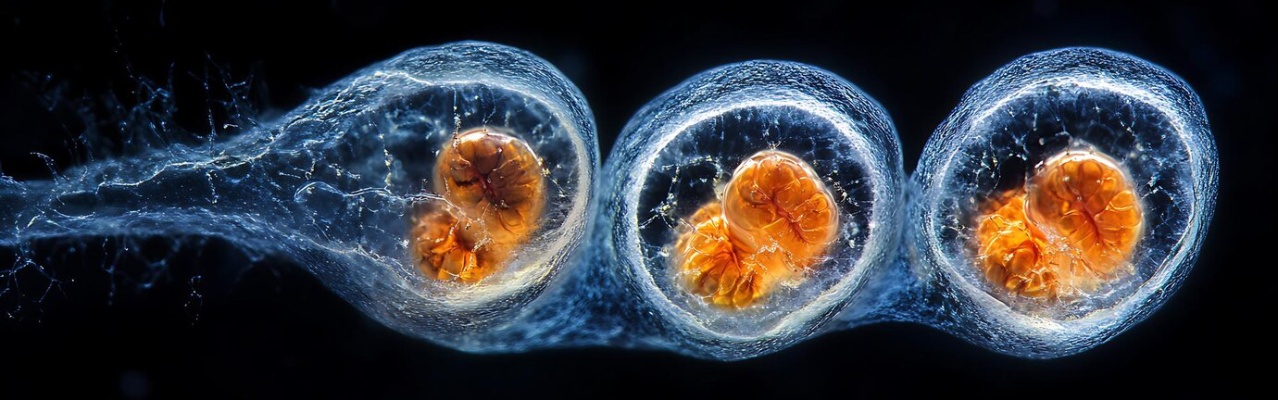
Most couples arrive at in vitro fertilisation after other things have been tried, and arrive
frightened of it. This page is written for that moment. It explains when in vitro fertilisation is
genuinely the right treatment, when it is not, the decisions you will be asked to
make along the way, and what can go wrong. For the procedural detail of a cycle
— visit by visit — see
IVF
treatment step by step.
On this page
- What in vitro fertilisation is, and what it cannot fix
- When IVF is the right treatment
- When something simpler should come first
- An IVF cycle in outline
- The decisions you will be asked to make
- What can go wrong in a cycle
- What to bring to your first consultation
- Common questions
What in vitro fertilisation is, and what it cannot fix
IVF replaces the parts of conception that happen inside the body with steps
that can be controlled and watched. The ovaries are stimulated so that several
eggs mature instead of one. The eggs are collected. Sperm and egg are brought
together in the laboratory. The resulting embryos are grown for a few days, and
one is transferred into the uterus.
What IVF does well is bypass mechanical and cellular obstacles — blocked
tubes, sperm that cannot reach or penetrate an egg, ovulation that will not
happen on its own.
What IVF cannot do is improve the quality of the eggs or sperm you have. It
works with what is there. That is the honest limitation, and it is the reason
that age and ovarian reserve matter so much to what IVF can and cannot achieve
for a particular couple.
When IVF is the right treatment
IVF is usually recommended when:
- Both fallopian tubes are blocked or damaged, or have been
removed. - There is significant male factor infertility — a very low
count, poor motility, or sperm that has to be retrieved surgically. In these
cases fertilisation is done by
ICSI. - Ovulation cannot be induced, or tablets and IUI have
already been tried without success. - There is moderate or severe endometriosis distorting the
pelvis. - Ovarian reserve is reduced and waiting is costly.
- Embryos need genetic testing, because of a known inherited
condition or a chromosomal rearrangement in one partner. - Fertility is being preserved before chemotherapy or
radiotherapy. - Donor eggs or donor sperm are being used, where IUI is not
suitable.
When something simpler should come first
IVF is not automatically the answer to a year of trying. A great many couples
who walk into a fertility clinic do not need it.
If you ovulate irregularly and your tubes are open, ovulation induction with
tablets may be all that is required. If tests on both partners are normal and the
sperm sample is reasonable,
IUI
is a lighter first step. If a treatable problem has been found — an underactive
thyroid, a uterine polyp, significant weight gain, a varicocele — treating it
first can change what is needed next.
At Jananam Fertility Centre both partners are evaluated before a plan is made,
and IVF is recommended when the tests indicate it gives you the best chance —
not as a default.
An IVF cycle in outline
From the start of a period to a pregnancy test, a fresh IVF cycle runs for
roughly four to six weeks. The main stages are:
- Baseline assessment — scan and blood tests to plan the
dose. - Ovarian stimulation — daily injections for roughly nine to twelve days,
with scans every few days to watch the follicles. - Trigger and egg collection — a final maturation injection,
then eggs are collected about thirty-four to thirty-six hours later, under
sedation, through the vaginal wall with ultrasound guidance. It takes about
twenty minutes and you go home the same day. - Fertilisation — conventional IVF or ICSI, checked the next
morning. - Embryo culture — embryos are grown for three to five days,
to cleavage or blastocyst stage. - Transfer — one embryo is usually placed into the uterus
with a soft catheter. No anaesthesia is needed. - Luteal support and the wait — progesterone support, and a
blood pregnancy test about two weeks later.
The decisions you will be asked to make
An IVF cycle is a series of decisions, not a single product. These are the
ones that actually matter.
Conventional IVF or ICSI?
In conventional IVF, prepared sperm is placed around each egg and left to
fertilise it. In ICSI, a single sperm is injected directly into the egg. ICSI is
the right choice where sperm quality or count makes natural fertilisation
unlikely, where sperm has been retrieved surgically, or where fertilisation
failed in a previous cycle. Where the sperm is normal, ICSI adds cost and
laboratory handling without adding anything else.
Fresh transfer or freeze-all?
An embryo can be transferred in the same cycle the eggs were collected, or all
the embryos can be frozen and transferred in a later, unstimulated cycle. A
freeze-all approach is usually preferred when there is a risk of ovarian
hyperstimulation, when progesterone has risen early, when the lining is not ready,
or when embryos are being genetically tested. See
embryo freezing.
How many embryos to transfer?
Transferring two embryos does not double anything except the risk. A twin
pregnancy carries materially higher risks of prematurity, high blood pressure and
neonatal complications. Single embryo transfer is the safer default for most
patients, with any remaining embryos frozen for later.
Which add-ons, if any?
You will be offered extras. Some are appropriate for some patients; many are
sold far more widely than the evidence supports. Jananam offers add-ons
selectively rather than routinely, and recommends one only where there is a
reasonable clinical justification for that individual patient. For an example of
what that means in practice, read
why
we stopped offering the ERA test.
What can go wrong in a cycle
Being told these things in advance is easier than meeting them unprepared.
- Poor response. Fewer follicles grow than hoped. The cycle
may be cancelled and the protocol changed. - Over-response and OHSS. Too many follicles. Managed by
adjusting the trigger and freezing all embryos. - Fewer mature eggs than follicles. Not every follicle
contains a mature egg. - Failed or low fertilisation. Eggs and sperm do not
combine as expected. - Embryos that stop developing. Some arrest before transfer.
This is common and not anyone’s fault. - No embryo to transfer. The hardest outcome, and one every
patient should be warned is possible before starting.
What to bring to your first consultation
Bring everything you already have: previous hormone results, scan reports,
HSG or HyCoSy films, semen analyses, operation notes, and the details of any
earlier IUI or IVF cycles including the drugs and doses used. Both partners
should attend if possible, because half of the assessment concerns the male
partner. Repeating tests you have already had is a waste of your money and your
time — but only if the earlier results are actually available to read.
Common questions
How long does one IVF cycle take?
About four to six weeks from the start of your period to the pregnancy test,
if a fresh transfer is done. A freeze-all cycle takes longer overall, because the
transfer happens in a later cycle — usually the following month or the one after.
Is egg collection painful?
It is done under sedation, so you do not feel it at the time. Afterwards most
women have period-like cramping and some bloating for a day or two. You go home
the same day. Severe pain, heavy bleeding, fever or breathlessness should be
reported to the clinic immediately.
Is an IVF baby different from a naturally conceived baby?
No. Fertilisation happens in a laboratory dish instead of a fallopian tube;
after the embryo implants, the pregnancy develops exactly as any other pregnancy
does. Children conceived by IVF have been followed for more than four decades.
Do we have to do ICSI?
Not unless there is a reason. ICSI is indicated for significant male factor
infertility, surgically retrieved sperm, or previous failed fertilisation. If
your semen analysis is normal and there is no history of fertilisation failure,
ask why it is being recommended.
How many IVF cycles should we expect?
More than one is common, and that is not a sign that something has gone wrong.
What should happen after each unsuccessful cycle is a proper review — of the
response, the eggs, the fertilisation, the embryos and the lining — so that the
next attempt is different in some specific way, rather than a repeat.
Can we use IVF if the male partner has no sperm in the ejaculate?
Often, yes. Sperm can frequently be retrieved directly from the testis or
epididymis by TESA or PESA and used for ICSI.
The HFEA publishes a comparable patient outline of in vitro fertilisation, and the NICE fertility guideline (CG156) sets out when it is clinically indicated.

Written and medically reviewed by Dr. Vani Sundarapandian, MD, DGO, FRCOG
(UK) — founder and Medical Director, Jananam Fertility Centre, Chennai.


