
IVF AND IUI
Infertility Evaluation and Management: A Complete Guide for Chennai Couples
Understand infertility evaluation and management step by step: causes, diagnostic tests, IUI, IVF, lifestyle changes, and when to seek help. Expert guidance
- Home
- Journal
- ivf and iui
- Infertility Evaluation and Management

Key takeaways
- Infertility is defined as failure to conceive after 12 months of regular unprotected intercourse, affecting approximately one in seven couples worldwide.
- Approximately 25% of infertility cases remain unexplained after standard evaluation covering ovulation, tubal patency, and semen analysis.
- Ovarian reserve is assessed using serum AMH and antral follicle count (AFC); an AMH below 5.4 pmol/L predicts a poor response to ovarian stimulation.
- Two semen samples spaced apart are recommended for male factor assessment, with hormonal and genetic testing added when parameters are abnormal.
- IUI with ovarian stimulation improves live birth rates in couples with unexplained infertility and a poor prognosis for natural conception, while expectant management suits couples with a good prognosis.
The short answer
Infertility evaluation and management is the structured process of identifying why a couple has not conceived after 12 months of regular unprotected intercourse (or 6 months if the woman is 36 or older), then selecting the most appropriate treatment. Evaluation covers ovarian reserve testing, semen analysis, hormonal profiling, and tubal patency assessment.
01What is infertility evaluation and management?
Infertility evaluation and management is the clinical process of systematically identifying the cause of a couple's difficulty conceiving and then applying the most appropriate treatment. Evaluation begins after 12 months of regular unprotected intercourse in women under 36, or after 6 months in women aged 36 or older. Management is then tailored to the specific diagnosis, ranging from simple lifestyle adjustments to advanced assisted reproduction.
According to a clinical review published in the Journal of Clinical Pathology, the main causes of subfertility are ovulatory dysfunction, male factor infertility, tubal disease, and unexplained infertility. Understanding which category applies to a couple is the foundation of every treatment decision that follows.
At Jananam Fertility Centre in Neelankarai, Chennai, infertility evaluation and management is the clinic's sole focus. Because the team treats only fertility cases, every protocol, every piece of equipment, and every consultation is oriented toward one outcome: helping couples understand their situation and move forward with confidence.
02How common is infertility, and who does it affect?
Infertility affects approximately one in seven couples, making it one of the most common reproductive health concerns a couple will face. Research published via PubMed Central confirms that over 80% of couples in which the woman is under 40 will conceive within one year if intercourse occurs every 2 to 3 days. When conception has not occurred within that window, a structured infertility evaluation and management plan becomes appropriate.
Several modifiable factors influence these figures. A female body mass index (BMI) at or above 30 is associated with reduced fertility, and smoking is likely to reduce fertility in women. Semen quality, assessed against World Health Organization reference values, is equally important in the initial picture. These facts matter because they point toward changes a couple can make before or alongside clinical treatment.
In Chennai, as across urban India, couples are increasingly seeking infertility evaluation and management earlier, partly because awareness has grown and partly because career timelines mean many couples begin trying to conceive in their early to mid-thirties, when the window for natural conception is already narrowing.
03What are the key causes of infertility?
The four major categories of infertility are ovulatory dysfunction, male factor infertility, tubal and uterine factors, and unexplained infertility. According to a review in the Journal of Clinical Pathology, approximately 25% of cases remain unexplained after a standard evaluation has ruled out the other three. Identifying the category is the first step in any infertility evaluation and management pathway, because each category leads to a different set of investigations and treatments.
It is important to note that more than one cause can coexist. A couple may have mild ovulatory irregularity alongside borderline semen parameters, and both issues need to be addressed. This is why a thorough, simultaneous evaluation of both partners is always recommended rather than investigating one partner at a time.
04Ovulatory dysfunction and ovarian reserve: what do they mean?
Ovulatory dysfunction means that eggs are not being released regularly or at all, and it is one of the most common causes of female infertility. The World Health Organization classifies ovulatory disorders into three groups: Group I covers hypogonadotropic conditions such as hypothalamic amenorrhoea; Group II covers normogonadotropic conditions such as polycystic ovary syndrome (PCOS); and Group III covers ovarian insufficiency, including premature ovarian insufficiency (POI). Each group has a different hormonal profile and responds to different treatments.
Ovarian reserve refers to the number and quality of eggs remaining in the ovaries. It is measured using serum anti-Mullerian hormone (AMH) and antral follicle count (AFC) on transvaginal ultrasound. According to the Journal of Clinical Pathology review, an AMH below 5.4 pmol/L predicts a poor ovarian response to stimulation, while elevated AMH is associated with PCOS. These tests are recommended before IVF to allow the team to tailor the stimulation protocol.
You can learn more about ovarian reserve testing and what your AMH result means on the Jananam website. For women with PCOS, the PCOS treatment pathway at Jananam addresses both the hormonal and reproductive aspects of the condition. The Certified Cleanroom Lab at Jananam is particularly relevant for women with low AMH or poor ovarian reserve, where laboratory conditions have a direct bearing on the quality of eggs retrieved and embryos cultured.
05Male factor infertility: how is it diagnosed?
Male factor infertility is identified through semen analysis, which assesses sperm concentration, motility, and morphology against WHO reference values. Abnormalities include oligozoospermia (low count), asthenozoospermia (poor motility), teratozoospermia (abnormal shape), and azoospermia (no sperm). According to the Journal of Clinical Pathology, two semen samples taken at an interval are recommended to confirm findings, because semen parameters can vary between samples.
When semen parameters are abnormal, the evaluation is extended. Hormonal testing, including fasting testosterone and gonadotropins (FSH and LH), helps identify whether the problem originates in the testes or in the hormonal signals from the brain. Genetic testing, including karyotype analysis and Y chromosome microdeletion screening, is advised in specific cases, particularly azoospermia and severe oligozoospermia.
Sperm DNA fragmentation is an additional test that measures damage to the genetic material inside sperm. High fragmentation rates can explain recurrent implantation failure or recurrent miscarriage even when standard semen parameters appear normal. The team at Jananam includes sperm DNA fragmentation testing in its male factor evaluation where clinically indicated.
06Tubal and uterine factors: how are they assessed?
Tubal factor infertility occurs when one or both fallopian tubes are blocked or damaged, preventing sperm from reaching the egg or the fertilised egg from reaching the uterus. Tubal patency is assessed by hysterosalpingography (HSG), hystero-contrast sonography (HyCoSy), or laparoscopy with dye. According to the Journal of Clinical Pathology, HyCoSy avoids radiation exposure and is widely used as a first-line test, while laparoscopy, though more invasive, allows direct visualisation and treatment of conditions such as endometriosis.
Uterine abnormalities, including fibroids, polyps, a septum, or adhesions inside the cavity, can also impair implantation. Transvaginal ultrasound is the standard first-line imaging tool, and a saline infusion sonogram or hysteroscopy may follow if an abnormality is suspected. Women with a history of endometriosis are at higher risk of both tubal and uterine factors, and their evaluation is typically more detailed from the outset.
07What is unexplained infertility, and how is it managed?
Unexplained infertility is a diagnosis of exclusion: it is reached when ovulation is confirmed, tubal patency is normal, semen analysis is within reference ranges, and intercourse frequency is adequate, yet conception has not occurred. According to a review published in PubMed Central, up to half of couples seeking infertility care may fall into this category, making it the single largest diagnostic group.
Management of unexplained infertility is guided by prognosis. Prediction models such as the Hunault model estimate the probability of natural conception within a defined period. Couples with a good prognosis (above 30% chance of natural conception) are generally advised to continue trying, with expectant management and lifestyle support. Couples with a poor prognosis benefit from active treatment: IUI with ovarian stimulation improves live birth rates in this group, while IVF offers higher success rates when IUI has not worked or when other factors are present.
The team at Jananam takes a personalised approach to unexplained infertility, using the full diagnostic picture, including AMH, AFC, sperm DNA fragmentation, and uterine assessment, to refine the prognosis before recommending a treatment pathway. This avoids both under-treatment (waiting too long) and over-treatment (moving to IVF before simpler options have been tried).
08Infertility evaluation: what does the step-by-step process look like?
A complete infertility evaluation and management workup covers both partners simultaneously and follows a logical sequence from history to imaging. According to the Journal of Clinical Pathology, the initial assessment includes a comprehensive history (duration of infertility, menstrual pattern, sexual history, previous pregnancies, and medical history), physical examination including BMI and signs of hormonal imbalance, semen analysis, serum mid-luteal progesterone to confirm ovulation, hormonal profile (FSH, LH, prolactin), ovarian reserve markers (AMH and AFC), and imaging for tubal patency and uterine structure.
The sequence matters. Semen analysis is non-invasive and inexpensive, so it is always done early. Ovarian reserve testing follows, because the result influences every subsequent decision. Tubal assessment is typically the last step in the female evaluation, as it is more invasive. This staged approach means that couples are not exposed to unnecessary procedures.
- Test: Semen analysis (x2) · What it measures: Sperm count, motility, morphology vs WHO values · When it is done: Early in evaluation, both samples spaced apart
- Test: Serum mid-luteal progesterone · What it measures: Confirms ovulation has occurred · When it is done: Day 21 of a 28-day cycle, or 7 days before expected period
- Test: FSH, LH, prolactin · What it measures: Pituitary hormonal signals to the ovaries · When it is done: Day 2 or 3 of the menstrual cycle
- Test: AMH and AFC · What it measures: Ovarian reserve: egg quantity remaining · When it is done: Any day of the cycle for AMH; day 2-5 for AFC
- Test: Transvaginal ultrasound · What it measures: Uterine structure, ovarian morphology, follicle count · When it is done: Early in evaluation
- Test: HSG or HyCoSy · What it measures: Tubal patency and uterine cavity outline · When it is done: After basic tests, if indicated
- Test: Hormonal and genetic testing (male) · What it measures: Testosterone, FSH, LH; karyotype; Y microdeletions · When it is done: When semen analysis is abnormal
09When should a couple seek medical advice?
Couples should seek infertility evaluation and management after 12 months of regular unprotected intercourse if the woman is under 36, or after 6 months if she is 36 or older. Earlier referral is appropriate when there is a known risk factor: irregular or absent periods, a previous diagnosis of PCOS or endometriosis, a history of pelvic infection, prior surgery on the fallopian tubes or uterus, or a known semen abnormality. According to research on barriers to infertility care, psychological readiness and social stigma also affect when couples seek help, and addressing these barriers early leads to better outcomes.
In Chennai, where family and social expectations around conception can be intense, many couples delay seeking help because of stigma or a belief that the problem will resolve on its own. The team at Jananam understands this context and provides a confidential, non-judgmental environment from the first consultation. Seeking an evaluation does not commit a couple to any particular treatment; it simply provides the information needed to make an informed decision.
10What treatment options are available for infertility?
Treatment for infertility is matched to the diagnosis and ranges from lifestyle modification and ovulation induction through to IUI and IVF. According to a review in Seminars in Reproductive Medicine, IVF offers higher pregnancy rates than other treatments, particularly after simpler options have been tried, but it is also more intensive and costly. The goal of infertility evaluation and management is to identify the least invasive treatment that gives a couple a realistic chance of success.
Ovulation induction uses oral medications (letrozole or clomiphene citrate) or injectable gonadotropins to stimulate the ovaries to produce one or more follicles. It is most appropriate for women with ovulatory dysfunction and is usually combined with timed intercourse or IUI. IUI places a prepared sperm sample directly into the uterus around the time of ovulation, improving the number of sperm reaching the fallopian tube. It is a reasonable first step for couples with unexplained infertility or mild male factor.
When IUI has not succeeded or when the diagnosis points directly to IVF, the team at Jananam will discuss IVF in detail. For couples where male factor is the primary issue, ICSI (intracytoplasmic sperm injection) is used: a single sperm is injected directly into each egg, bypassing barriers to fertilisation. Where a woman's own eggs are not viable, donor egg IVF is an option discussed in accordance with the ART (Regulation) Act 2021.
- Treatment: Expectant management · Best suited for: Good-prognosis unexplained infertility, young couples · Key consideration: Appropriate only when prognosis model supports it
- Treatment: Lifestyle modification · Best suited for: Overweight or underweight women, smokers, both partners · Key consideration: Can improve ovulation and sperm quality before other treatment
- Treatment: Ovulation induction · Best suited for: Ovulatory dysfunction (PCOS, Group II) · Key consideration: Monitoring required to avoid multiple follicles
- Treatment: IUI with ovarian stimulation · Best suited for: Poor-prognosis unexplained infertility, mild male factor · Key consideration: Monitoring essential; single embryo transfer principles apply
- Treatment: IVF · Best suited for: Tubal factor, moderate-severe male factor, failed IUI, low ovarian reserve · Key consideration: Laboratory quality directly affects outcomes
- Treatment: ICSI · Best suited for: Severe male factor, prior fertilisation failure · Key consideration: Used within an IVF cycle; single sperm injected per egg
- Treatment: Donor egg IVF · Best suited for: Very low ovarian reserve, premature ovarian insufficiency · Key consideration: Governed by ART (Regulation) Act 2021 in India
11How do lifestyle modifications support infertility treatment?
Lifestyle factors have a measurable effect on fertility for both partners, and addressing them is a core part of infertility evaluation and management before and during treatment. According to a review in Obstetrical and Gynecological Survey, weight loss in overweight or underweight women can restore ovulation and improve fertility, while smoking cessation is recommended because smoking damages oocyte quality and sperm parameters.
For women, maintaining a BMI in the healthy range (18.5 to 24.9) supports regular ovulation and improves the response to ovarian stimulation. Alcohol intake should be minimised, and folic acid supplementation (400 micrograms daily) is recommended from the time a couple begins trying to conceive. For men, avoiding heat exposure to the testes, reducing alcohol, stopping smoking, and managing stress all contribute to better semen parameters.
In Chennai's urban environment, sedentary work, irregular meal patterns, and high stress levels are common. The team at Jananam incorporates practical, culturally relevant lifestyle advice into every consultation, recognising that small, sustainable changes often make a meaningful difference to treatment outcomes.
12Assisted reproductive technologies: how do IUI and IVF work?
Assisted reproductive technologies (ART) are medical procedures that handle eggs, sperm, or embryos outside the body to achieve pregnancy. IUI and IVF are the two most commonly used, and the choice between them depends on the diagnosis, the couple's prognosis, and how previous treatments have responded. According to the Journal of Clinical Pathology, laboratory expertise directly affects IVF success rates, which is why the quality of the embryology lab is a critical factor when choosing a clinic.
IUI involves stimulating the ovaries with low-dose medication, monitoring follicle growth by ultrasound, and then placing a washed and concentrated sperm sample into the uterus through a thin catheter at the time of ovulation. The procedure takes a few minutes and does not require anaesthesia. Careful monitoring is essential to avoid stimulating too many follicles, which raises the risk of multiple pregnancy.
IVF involves controlled ovarian stimulation with injectable gonadotropins over 10 to 14 days, followed by egg retrieval under sedation, fertilisation in the laboratory, embryo culture for 3 to 5 days, and embryo transfer into the uterus. Single embryo transfer is the standard approach to minimise the risk of twins or higher-order multiples. Pre-implantation genetic testing (PGT) can be added to screen embryos for chromosomal abnormalities before transfer, which is particularly relevant for couples with recurrent miscarriage or advanced maternal age. Sex determination is prohibited by law in India under the PCPNDT Act 1994; PGT at Jananam is used exclusively for the detection of genetic disease.
13How does emotional wellbeing fit into infertility evaluation and management?
Infertility causes significant psychological distress for many couples, and this is a recognised part of the clinical picture, not a separate concern. According to research on barriers to infertility care, stigma, fear, and work-life balance challenges are among the most common reasons couples delay or discontinue treatment. Screening for psychological distress and facilitating access to counselling are described as integral components of comprehensive infertility evaluation and management.
Anxiety and depression are more common in people undergoing fertility treatment than in the general population, and they can affect treatment adherence and outcomes. The team at Jananam acknowledges this openly. Consultations are structured to allow time for questions and concerns, and referral to a counsellor is available for couples who would benefit from additional support.
Cultural factors specific to Chennai and Tamil Nadu, including family pressure, the social significance of parenthood, and the stigma sometimes attached to infertility, can intensify distress. Recognising these pressures and addressing them as part of the care plan, rather than treating them as outside the clinic's remit, is part of what makes infertility evaluation and management at Jananam different from a purely procedural approach.
14Why does the choice of fertility clinic matter for infertility evaluation and management?
The quality of the embryology laboratory is one of the most significant variables in IVF outcomes, and it is not visible to patients from the outside. A Certified Cleanroom Lab maintains tightly controlled air quality, temperature, humidity, and volatile organic compound levels, all of which affect embryo development. This matters most for women with low AMH or poor ovarian reserve, where every egg retrieved is precious and laboratory conditions can determine whether a viable embryo is produced.
Jananam Fertility Centre in Neelankarai, Chennai, is a single-speciality clinic: it treats infertility only. The consultants have over two decades of combined experience in reproductive medicine, and because the clinic does not divide its attention across multiple specialities, protocols are refined specifically for fertility cases. For couples navigating infertility evaluation and management for the first time, this focus means that every step of the process, from the first blood test to embryo transfer, is handled by a team whose entire expertise is in this field.
You can read more about what makes Jananam different on the clinic's website. For couples who have already had an unsuccessful cycle elsewhere, or who have been told their case is complex, a second opinion from a specialist team with deep experience in infertility evaluation and management can open new options.
When to call us
- You have been trying to conceive for 12 months (or 6 months if you are 36 or older) without success.
- Your periods are irregular, very infrequent, or absent.
- You have a known diagnosis of PCOS, endometriosis, or premature ovarian insufficiency.
- A previous semen analysis has shown abnormal results.
- You have had two or more miscarriages.
- You have had pelvic surgery, a pelvic infection, or a history of sexually transmitted infection that may have affected the fallopian tubes.
Questions couples ask
How long should we try before starting an infertility evaluation?
The standard recommendation is 12 months of regular unprotected intercourse for women under 36, and 6 months for women aged 36 or older. Earlier evaluation is appropriate if either partner has a known risk factor such as irregular periods, a previous pelvic infection, or an abnormal semen result.
Does infertility evaluation and management always lead to IVF?
No. Many couples are treated successfully with simpler interventions such as lifestyle changes, ovulation induction, or IUI. IVF is recommended when the diagnosis points to it directly, when simpler treatments have not worked, or when the couple's prognosis makes a more direct route more appropriate. The evaluation itself determines which path is right.
What does an AMH test tell us, and is a low result the end of the road?
AMH (anti-Mullerian hormone) reflects the number of eggs remaining in the ovaries. A low AMH indicates a reduced ovarian reserve, which means fewer eggs are likely to be retrieved in an IVF cycle. It does not measure egg quality, and many women with low AMH conceive successfully with appropriate treatment. The Certified Cleanroom Lab at Jananam is specifically relevant for these cases.
Can male factor infertility be treated?
Yes, in many cases. Lifestyle changes, hormonal treatment, and surgical correction of conditions such as varicocele can improve semen parameters. Where sperm count or motility is severely reduced, ICSI (intracytoplasmic sperm injection) within an IVF cycle allows fertilisation using a single sperm, bypassing the barriers that prevent natural conception.
What is the difference between IUI and IVF?
IUI places prepared sperm directly into the uterus around ovulation; fertilisation still occurs inside the body. IVF retrieves eggs from the ovaries, fertilises them in the laboratory, and transfers the resulting embryo into the uterus. IVF is more intensive but offers higher success rates, particularly for tubal factor, moderate to severe male factor, and cases where IUI has not worked.
Is infertility treatment covered by insurance in India?
Coverage varies widely between insurers and policies. Some group health insurance plans now include limited ART coverage following the ART (Regulation) Act 2021, but many do not. It is worth checking your policy documents and speaking to your insurer directly. The team at Jananam can provide documentation to support insurance claims where applicable.
How many IVF cycles might we need?
There is no fixed answer, because outcomes depend on age, diagnosis, ovarian reserve, and embryo quality. Fertility treatment outcomes vary, and multiple cycles are often needed. Your consultant will discuss a realistic prognosis based on your specific results before any treatment begins.
Does stress cause infertility?
Stress alone is unlikely to be the primary cause of infertility, but significant psychological distress can affect hormonal balance and treatment adherence. Addressing stress as part of a comprehensive infertility evaluation and management plan is recommended, and counselling support is available at Jananam for couples who need it.
Not the question you had?
The questions people don't ask with their partner sitting beside them, answered by Dr Vani Sundarapandian.


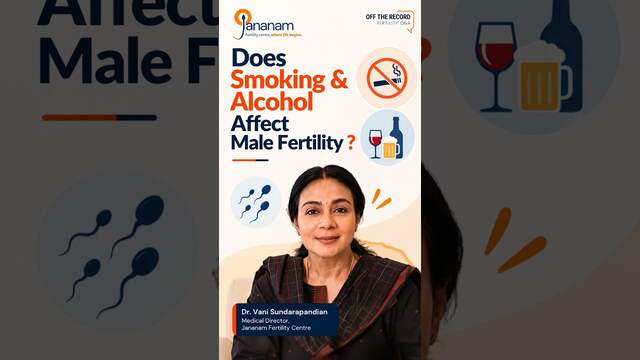

Reviewed by
Dr Vani Sundarapandian
MD, DGO, FRCOG (UK) · Founder, Jananam Fertility Centre
Published by the Jananam team. Waiting for review by Dr Vani Sundarapandian, MD, DGO, FRCOG (UK)
Sources (6)
- Infertility: definitions, epidemiology and modifiable risk factors. PubMed Central, 2013.
- Investigation and management of infertility. Journal of Clinical Pathology, BMJ, 2019.
- Unexplained infertility: management and prognosis. PubMed Central, 2024.
- Barriers to infertility care and psychological wellbeing. Universal Journal of Public Health, 2024.
- Treatment of infertility: overview of assisted reproductive technologies. Seminars in Reproductive Medicine, 2020.
- Lifestyle and fertility: the influence of modifiable risk factors. Obstetrical and Gynecological Survey, 2020.
Diagnosis of Anovulation: Tests, Causes & When to Seek Help
The diagnosis of anovulation begins with a menstrual history and a mid-luteal serum progesterone test, taken around day 21 of a 28-day cycle; a result above 30 nmol/L confirms ovulation occurred.
Sperm DNA Fragmentation Test Chennai
A sperm DNA fragmentation test measures the proportion of sperm with broken or damaged DNA strands, damage that a standard semen analysis cannot detect.
Varicocele Treatment and Infertility: Complete Guide
Varicocele treatment and infertility are closely linked: varicocele, an abnormal enlargement of the veins in the scrotum, is the most common surgically correctable cause of male infertility, affecting 35–40% of men with primary infertility.
Unexplained Infertility: Is IVF the Only Option?
No. When every test is normal but pregnancy has not happened, the diagnosis is unexplained infertility, and IVF is one option among several.
Weight Loss and Fertility: Proven Strategies for Chennai
Weight loss and fertility are closely connected: excess body weight disrupts ovulation, lowers sperm quality, and reduces the success of fertility treatments.
Secondary Infertility in Chennai: Causes and Treatment
Secondary infertility in Chennai is the inability to conceive or carry a pregnancy to term after previously having a biological child.
Not sure where your infertility evaluation should start?
A single consultation at Jananam covers both partners and maps out exactly which tests are needed and in what order.
Sex selection is prohibited in India under the PCPNDT Act, 1994 and the ART Act, 2021.