
IVF AND IUI
Understanding Silent Endometriosis: A Complete Guide to Endometriosis Diagnosis and Treatment
Endometriosis can exist without obvious pain. Learn how silent endometriosis is identified, what imaging and laparoscopy reveal, and which treatments protect
- Home
- Journal
- ivf and iui
- Silent Endometriosis: Diagnosis and Treatment Options |
Key takeaways
- Silent endometriosis is a recognised form of the condition in which a person has little or no pain, yet endometrial-like tissue outside the uterus is still present and can impair fertility.
- According to current guidance published in Human Reproduction Open (2024), transvaginal ultrasound and MRI are the recommended first-line imaging tools, and a clinical diagnosis can be made without laparoscopy in many cases.
- Progestins such as dienogest are considered first-line hormonal treatment for endometriosis-related pain and are supported for long-term use; GnRH agonists and antagonists are second-line options due to their side-effect profiles.
- Laparoscopy with histological confirmation remains the definitive diagnostic and treatment procedure, allowing excision or ablation of lesions in the same operation.
- Hormonal suppression alone is not recommended as a strategy to improve fertility in endometriosis; assisted reproductive technology (ART) is the evidence-based route when natural conception is not achieved.
The short answer
Endometriosis diagnosis and treatment begins with a clinical history and pelvic examination, followed by transvaginal ultrasound or MRI, with laparoscopy reserved as the gold-standard confirmation. Silent endometriosis, where the condition causes little or no pain, is diagnosed the same way and is equally important to treat, because untreated endometriosis can impair fertility even when symptoms are absent. First-line treatment is hormonal therapy; surgery is offered when medication fails.
01What is endometriosis?
Endometriosis is a chronic inflammatory disease in which tissue resembling the lining of the uterus (the endometrium) grows outside the uterus, on the ovaries, fallopian tubes, bowel, bladder, or pelvic lining. According to a review published in the Australian Journal of General Practice (2023), this misplaced tissue causes pain, infertility, and can severely reduce quality of life. It affects roughly one in ten people with a uterus during their reproductive years.
The condition exists on a spectrum. Some people experience debilitating pelvic pain; others, a group described as having silent endometriosis, have minimal or no symptoms at all, yet the disease is still active and can still damage reproductive organs. This variability is one reason endometriosis diagnosis and treatment is often delayed by several years from the onset of the condition.
Endometriosis is classified into four stages (I–IV) based on the location, extent, and depth of lesions. Stage I and II disease may produce surprisingly little pain, which is why silent endometriosis is not a mild or trivial finding, it simply means the nervous system is not registering the inflammation in the usual way. Understanding this distinction is the first step toward earlier, more effective care.
02What are the signs and symptoms of endometriosis, including silent forms?
The symptoms of endometriosis are highly variable. As noted in the Australian Journal of General Practice (2023), they include pelvic pain, painful periods (dysmenorrhoea), pain during intercourse (dyspareunia), pain on opening the bowels (dyschezia), and difficulty conceiving. However, silent or asymptomatic endometriosis, where none of these symptoms are prominent, is a well-documented presentation that poses a significant diagnostic challenge.
Silent endometriosis is often discovered incidentally: during an ultrasound for an unrelated reason, during investigation for unexplained infertility, or at the time of a laparoscopy performed for another indication. Because there is no pain to prompt a consultation, the condition can progress undetected for years. This is why fertility specialists consider endometriosis in the differential diagnosis even when a patient reports no significant pelvic discomfort.
Other symptoms that can be subtle or easily attributed to other causes include bloating, fatigue, irregular bleeding, and urinary urgency around the time of menstruation. If you are experiencing difficulty conceiving and have any of these background symptoms, even mild ones, it is worth discussing unexplained infertility with a specialist, as endometriosis may be an underlying factor.
- Painful periods (dysmenorrhoea), often severe and not relieved by standard painkillers
- Pelvic pain outside of menstruation, including mid-cycle pain
- Pain during or after sexual intercourse
- Pain on opening the bowels or passing urine, particularly during a period
- Heavy or irregular menstrual bleeding
- Difficulty conceiving or recurrent miscarriage
- No symptoms at all (silent endometriosis), discovered only on investigation
03How is endometriosis diagnosed?
Endometriosis diagnosis and treatment begins with a thorough clinical history and pelvic examination. According to guidance published in Human Reproduction Open (2024), transvaginal ultrasound (TVS) and MRI are the recommended imaging modalities, and a clinical diagnosis, sufficient to begin treatment, can be made without laparoscopy in many cases. This shift in approach is designed to reduce the diagnostic delay that has historically affected people with endometriosis.
The diagnostic pathway typically moves through three stages: first, a detailed symptom history and physical examination; second, targeted imaging; and third, laparoscopy with biopsy if imaging is inconclusive or if surgical treatment is being planned at the same time. Importantly, a negative ultrasound does not rule out endometriosis, particularly in early-stage or silent disease where lesions may be too small or superficial to visualise.
At Jananam Fertility Centre in Chennai, your consultant will take a structured history that specifically asks about the pattern and severity of pain, bowel and bladder symptoms, and any prior investigations. This detail matters because the location of symptoms often predicts where lesions are likely to be found, guiding the imaging protocol and any subsequent surgical planning.
04What do ultrasound and MRI show in endometriosis diagnosis?
Transvaginal ultrasound (TVS) has high sensitivity and specificity for detecting ovarian endometriomas (cysts filled with old blood, sometimes called 'chocolate cysts') and moderate sensitivity for deep infiltrating endometriosis (DIE). MRI complements TVS by providing better soft-tissue contrast, making it particularly useful for mapping lesions on the bowel, bladder, or uterosacral ligaments before complex surgery. According to Human Reproduction Open (2024), imaging accuracy in both modalities depends heavily on operator expertise.
For ovarian endometriomas, TVS is typically the first-line test and is highly reliable in experienced hands. For deep infiltrating disease, where lesions burrow more than 5 mm beneath the peritoneal surface, MRI adds important detail that changes surgical planning. Neither modality replaces laparoscopy for definitive histological confirmation, but together they allow a working diagnosis to be established and treatment to begin without delay.
It is worth noting that a normal ultrasound does not exclude endometriosis. Superficial peritoneal lesions, which are common in Stage I and II disease, are below the resolution of standard imaging. This is one reason why ovarian reserve testing, including AMH (anti-Müllerian hormone) measurement, is routinely performed alongside imaging in women presenting with fertility concerns, as a declining AMH can be an indirect signal of ongoing ovarian damage from endometriosis.
- Imaging Method: Transvaginal Ultrasound (TVS) · Best For: Ovarian endometriomas; first-line assessment · Limitation: May miss superficial peritoneal lesions and early-stage disease
- Imaging Method: MRI · Best For: Deep infiltrating endometriosis; pre-surgical mapping of bowel and bladder lesions · Limitation: Higher cost; less available; not required for all cases
- Imaging Method: Laparoscopy with biopsy · Best For: Definitive diagnosis; concurrent surgical treatment · Limitation: Invasive; requires general anaesthesia; not needed for initial clinical diagnosis
05What is laparoscopy and when is it used for endometriosis?
Laparoscopy, a keyhole surgical procedure performed under general anaesthesia, remains the gold standard for definitive endometriosis diagnosis and treatment. A thin camera is inserted through a small incision near the navel, allowing the surgeon to directly visualise the pelvis. Tissue samples (biopsies) are taken for histological confirmation, and in the same procedure, lesions can be treated by excision (cutting out) or ablation (burning away). According to a 2025 review on PubMed, increasing reliance on clinical and imaging diagnosis is recommended to avoid the diagnostic delays that arise when laparoscopy is treated as the mandatory first step.
Excision is generally preferred over ablation for deep infiltrating endometriosis because it removes the full depth of the lesion and provides tissue for pathological analysis. Ablation may be appropriate for superficial peritoneal disease. The choice between the two techniques depends on lesion type, location, and the surgeon's expertise, factors your consultant will discuss with you in detail before any procedure.
Laparoscopy is indicated when imaging is inconclusive, when medical treatment has not controlled symptoms adequately, or when surgical treatment is being planned to improve fertility. It is not a routine first step for every patient, and many people with endometriosis are appropriately managed on a clinical diagnosis supported by imaging alone.
06What are the medical treatment options for endometriosis?
Medical management is the first-line approach for endometriosis-related pain. According to the Australian Journal of General Practice (2023), this includes non-steroidal anti-inflammatory drugs (NSAIDs) as adjunct analgesics and hormonal therapies as the primary treatment. The goal of hormonal therapy is to suppress the cyclical stimulation of endometriotic tissue, reducing inflammation and pain.
Progestins, a class of synthetic progesterone, are considered first-line hormonal treatment. Dienogest, a progestin with a strong anti-proliferative effect on endometrial tissue, is well-supported for long-term use and is widely used in clinical practice. The combined oral contraceptive pill (COCP) is another common first-line option, particularly for younger patients who also require contraception. According to a review in Healthcare (2022), GnRH agonists and antagonists are second-line treatments due to their side-effect profiles, which include bone density loss with prolonged use and menopausal-type symptoms.
It is important to understand that hormonal therapies suppress endometriosis but do not cure it. Symptoms typically return after stopping treatment. For this reason, long-term management planning, including discussion of fertility goals and the timing of any surgical intervention, is an integral part of the consultation process at Jananam Fertility Centre.
- Treatment: NSAIDs (e.g., ibuprofen, naproxen) · Class: Analgesic · Primary Use: Adjunct pain relief · Key Consideration: Not disease-modifying; used alongside hormonal therapy
- Treatment: Combined oral contraceptive pill (COCP) · Class: Hormonal, first-line · Primary Use: Pain management; cycle regulation · Key Consideration: Suitable when contraception is also desired
- Treatment: Progestins (e.g., dienogest) · Class: Hormonal, first-line · Primary Use: Long-term pain suppression · Key Consideration: Well-tolerated; supported for extended use
- Treatment: GnRH agonists (e.g., leuprorelin) · Class: Hormonal, second-line · Primary Use: Refractory pain; pre-surgical suppression · Key Consideration: Bone density loss risk; add-back therapy often needed
- Treatment: GnRH antagonists (e.g., elagolix) · Class: Hormonal, second-line · Primary Use: Refractory pain · Key Consideration: Faster onset than agonists; similar side-effect profile
07When is surgery recommended for endometriosis?
Surgical management of endometriosis is indicated when medical therapy has not adequately controlled symptoms, when an ovarian endometrioma is causing pain or threatening ovarian reserve, or when fertility is the primary concern and surgical treatment may improve pregnancy rates. According to a 2025 PubMed review, excision of endometriotic lesions reduces pain and recurrence more effectively than ablation for deep disease, but cystectomy (removal of an endometrioma) carries a risk of reducing ovarian reserve and should be weighed carefully.
Deep infiltrating endometriosis (where lesions involve the bowel, bladder, or ureters) requires a specialised multidisciplinary surgical team that may include a colorectal or urological surgeon alongside the gynaecologist. This level of complexity is why pre-surgical MRI mapping is so important: it allows the team to plan the procedure in detail and counsel the patient about realistic outcomes and recovery.
Hysterectomy (removal of the uterus) is occasionally considered in severe, refractory cases where the patient has completed their family and all other options have been exhausted. It is not a cure for endometriosis if ovarian tissue is retained, as residual oestrogen can continue to stimulate any remaining lesions. This decision requires careful, unhurried discussion with your consultant.
08How does endometriosis affect fertility, and what are the treatment options?
Endometriosis affects fertility through multiple mechanisms: distortion of pelvic anatomy, impaired egg quality, inflammation of the follicular environment, and, in cases involving endometriomas, direct damage to ovarian tissue. According to a 2025 PubMed review, surgical treatment of mild-to-moderate endometriosis may improve natural pregnancy rates, while assisted reproductive technology (ART) is effective across all stages of the disease. Critically, hormonal suppression alone is not recommended as a strategy to improve fertility.
For women with endometriosis who are trying to conceive, the treatment pathway depends on age, ovarian reserve, the stage and location of disease, and whether a male factor is also present. IVF (in vitro fertilisation) is often the most efficient route, particularly when the fallopian tubes are affected or when ovarian reserve is already reduced. In some cases, ICSI (intracytoplasmic sperm injection) is combined with IVF to optimise fertilisation rates.
Women with endometriosis who are not yet ready to conceive but are concerned about future fertility may wish to consider egg freezing before ovarian reserve declines further, particularly if they have an endometrioma or have already had ovarian surgery. The team at Jananam will assess AMH and antral follicle count to give you an honest picture of your current reserve and help you plan accordingly. If recurrent miscarriage is also a concern, pre-implantation genetic testing (PGT) can be incorporated into an IVF cycle to screen embryos before transfer.
09What does endometriosis care look like at Jananam Fertility Centre, Chennai?
Jananam Fertility Centre is a single-speciality fertility clinic in Neelankarai, Chennai, focused exclusively on the diagnosis and treatment of infertility and related reproductive conditions, including endometriosis. The team brings over two decades of combined experience in reproductive medicine and takes a structured, evidence-based approach to endometriosis diagnosis and treatment, from the initial consultation through to any assisted conception that may follow.
For patients with low ovarian reserve secondary to endometriosis or prior ovarian surgery, Jananam's Certified Cleanroom Lab is particularly relevant. Maintaining optimal laboratory conditions is critical when working with a reduced number of eggs, as every embryo counts. Your consultant will review your AMH, antral follicle count, and imaging findings together before recommending a treatment pathway, ensuring that any surgical decision is made with full awareness of its potential impact on your fertility.
Endometriosis care at Jananam is not limited to the medical and surgical. The team recognises that living with a chronic condition, especially one that affects fertility, has a significant emotional dimension. Consultations are unhurried, questions are encouraged, and the pathway forward is always explained in plain language. If you have been told you have endometriosis or suspect you might, an early consultation allows the most options to remain open.
10How can lifestyle and multidisciplinary support help with endometriosis?
Medical and surgical treatment addresses the disease itself, but living well with endometriosis often requires broader support. According to a review published in PMC (2023), patient education, pelvic floor physiotherapy, and psychological interventions all improve quality of life in people with endometriosis, and multidisciplinary care is recommended as best practice.
Pelvic floor physiotherapy can reduce the muscular guarding and secondary pain that often develops alongside endometriosis, particularly when dyspareunia (pain during intercourse) is a feature. Psychological support (whether through counselling, cognitive behavioural therapy, or peer support groups) helps address the anxiety, grief, and identity challenges that a chronic fertility-affecting condition can bring.
Anti-inflammatory dietary approaches and regular moderate exercise are commonly discussed in patient communities, though the evidence base for specific dietary interventions remains limited. Your consultant can point you toward reputable resources and, where appropriate, refer you to allied health professionals who specialise in chronic pelvic pain.
When to call us
- Period pain that is not controlled by over-the-counter painkillers and is affecting your daily life
- Pelvic pain outside of your period, particularly if it is worsening over time
- Pain during or after sexual intercourse
- Difficulty conceiving after six months of trying if you are over 35, or after twelve months if you are under 35
- An ultrasound report mentioning an ovarian cyst, endometrioma, or 'chocolate cyst'
- A previous diagnosis of endometriosis and you are now planning a pregnancy
Questions couples ask
Can endometriosis be diagnosed without a laparoscopy?
Yes. According to guidance published in Human Reproduction Open (2024), a clinical diagnosis of endometriosis can be made on the basis of symptom history, pelvic examination, and imaging (transvaginal ultrasound or MRI) without requiring laparoscopy as a first step. Laparoscopy with biopsy remains the gold standard for definitive confirmation and is used when imaging is inconclusive or when surgical treatment is being planned.
What is silent endometriosis and how is it found?
Silent endometriosis refers to endometriosis that causes little or no pain, making it difficult to detect through symptoms alone. It is often discovered incidentally during an ultrasound, during investigation for unexplained infertility, or during a laparoscopy performed for another reason. Despite the absence of pain, silent endometriosis can still damage the ovaries and fallopian tubes and impair fertility.
Does endometriosis always cause infertility?
No, but it does increase the risk. Endometriosis affects fertility through pelvic inflammation, anatomical distortion, and damage to ovarian tissue. Many people with endometriosis conceive naturally, particularly those with mild disease. For those who do not, surgical treatment of mild-to-moderate disease may improve natural pregnancy rates, and IVF is effective across all stages of the condition.
Which hormonal treatment is best for endometriosis pain?
Progestins, particularly dienogest, are considered first-line hormonal treatment for endometriosis-related pain and are supported for long-term use. The combined oral contraceptive pill is also a first-line option. GnRH agonists and antagonists are second-line treatments, reserved for cases where first-line therapy has not been effective, due to their more significant side-effect profiles including bone density loss.
Will surgery for endometriosis reduce my ovarian reserve?
Cystectomy, surgical removal of an ovarian endometrioma, carries a recognised risk of reducing ovarian reserve, because healthy ovarian tissue can be inadvertently removed alongside the cyst wall. This risk must be weighed against the benefit of removing the cyst. Your consultant will assess your AMH and antral follicle count before recommending surgery and will discuss whether egg freezing beforehand is appropriate in your case.
Is hormonal treatment useful for improving fertility in endometriosis?
No. Current evidence, including a 2025 PubMed review, does not support the use of hormonal suppression as a strategy to improve fertility in endometriosis. Hormonal therapies suppress the disease and manage pain, but they also prevent conception during treatment. For women trying to conceive, the evidence-based options are surgical treatment where appropriate, or assisted reproductive technology such as IVF.
How long does endometriosis treatment take before trying IVF?
The timeline depends on the individual. If medical management is tried first, a minimum of three to six months is typically needed to assess response. If surgery is indicated, recovery before starting IVF is usually four to eight weeks. In some cases, particularly where ovarian reserve is already low, your consultant may recommend proceeding directly to IVF without prior surgical intervention to avoid further delay or ovarian damage.
Can PCOS and endometriosis occur together?
Yes, both conditions can coexist, though they have different mechanisms. PCOS affects ovulation and hormone balance, while endometriosis involves inflammatory lesions outside the uterus. Having both conditions can complicate fertility treatment, as the approach to ovarian stimulation and the risk of poor response or hyperstimulation must both be considered. A thorough evaluation at a specialist clinic will identify both conditions and tailor treatment accordingly.
Not the question you had?
The questions people don't ask with their partner sitting beside them, answered by Dr Vani Sundarapandian.

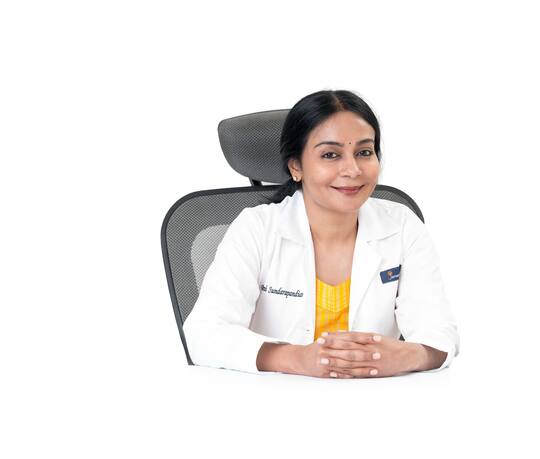
Reviewed by
Dr Vani Sundarapandian
MD, DGO, FRCOG (UK) · Founder, Jananam Fertility Centre
Written by the Jananam editorial team and reviewed by Dr Vani Sundarapandian, MD, DGO, FRCOG (UK), 20 years exclusively in fertility.
Sources (5)
- Endometriosis: A Review of Clinical Diagnosis, Treatment, and Patient Perspectives, Healthcare, MDPI, 2022
- Endometriosis: Diagnosis and Management, Australian Journal of General Practice, 2023
- Endometriosis Diagnosis and Management: ESHRE Guideline, Human Reproduction Open, Oxford University Press, 2024
- Endometriosis: Surgical and ART Management, PubMed Review, 2025
- Multidisciplinary Management and Quality of Life in Endometriosis, PMC, NIH, 2023
Sperm DNA Fragmentation Test Chennai
A sperm DNA fragmentation test measures the proportion of sperm with broken or damaged DNA strands, damage that a standard semen analysis cannot detect.
Endometriosis and Pregnancy: Symptoms & Treatment
Endometriosis is tissue like the womb lining growing outside the womb.
Two Week Wait: Coping Strategies for TTC Couples
The two week wait (TWW) is the 10–14 day period between embryo transfer or ovulation and a pregnancy test, widely recognised as one of the most psychologically demanding phases of fertility treatment.
IUI vs IVF: வேறுபாடு என்ன, எது சரியானது?
IUI‑க்கும் IVF‑க்கும் இடையிலான வேறுபாடு, கருவுறுதல் எங்கே நிகழ்கிறது என்பதே.
IVF கட்டுக்கதைகள்: உங்கள் அத்தை சொன்னவை, சரிபார்க்கப்பட்டு
பெரும்பாலான IVF கட்டுக்கதைகள் மிக அதிக நம்பிக்கையானவையோ மிகப் பயமுறுத்துபவையோ.
ஜனனத்தில் IVF திட்டம்: செயல்முறை நாள் வாரியாக
ஜனனம் கருவுறுதல் மையம், சென்னையில் ஒரு IVF சுழற்சி, உங்கள் மாதவிடாயின் 2‑ஆம் நாளில் ஒரு ஸ்கேனுடனும் ரத்தப் பரிசோதனையுடனும் தொடங்குகிறது.
Concerned about endometriosis and your fertility?
An AMH test and targeted ultrasound can establish your current ovarian reserve and guide the safest next step for your fertility.
Sex selection is prohibited in India under the PCPNDT Act, 1994 and the ART Act, 2021.