





- By: Jananam Fertility Centre
- September 11, 2026

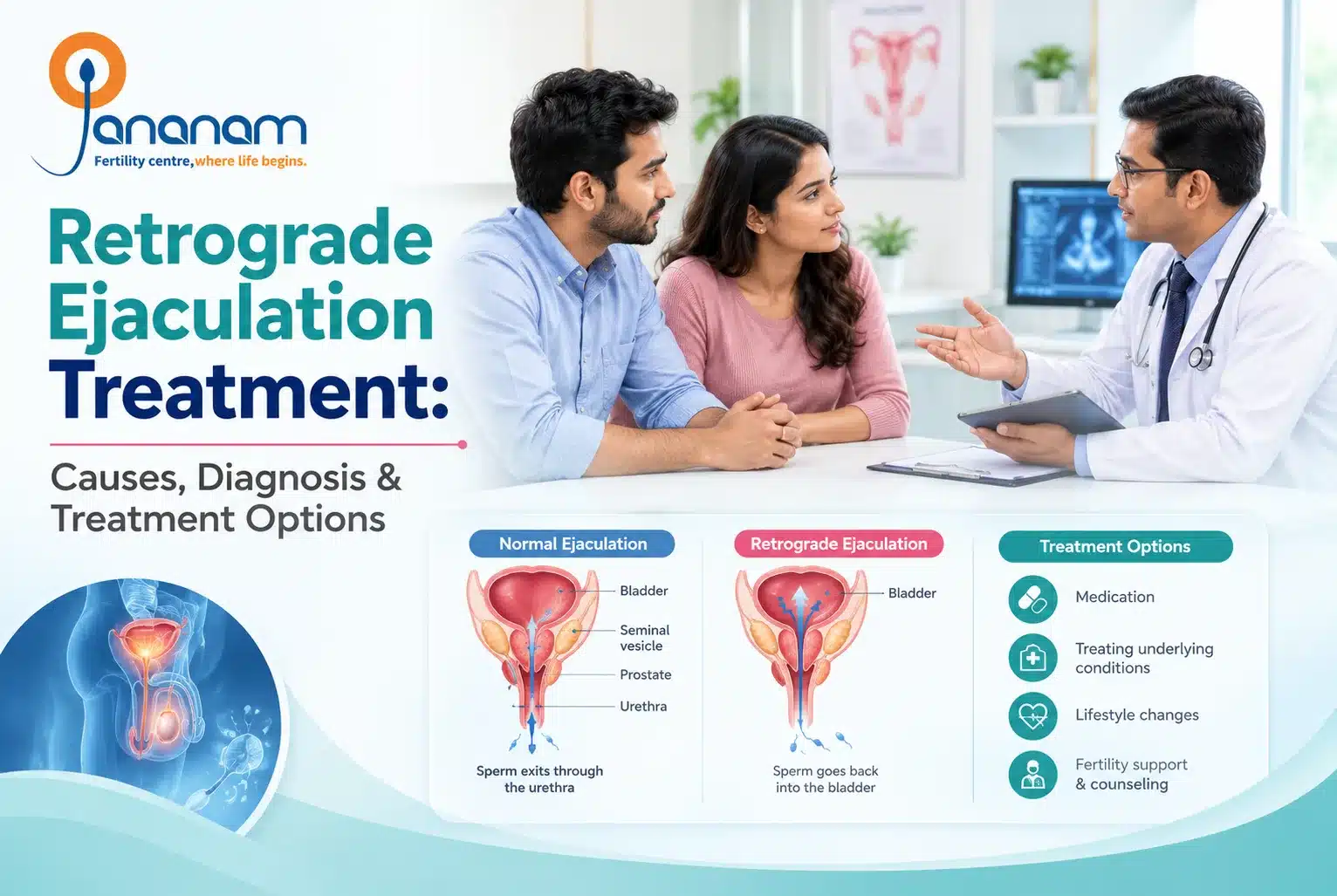
Retrograde Ejaculation Treatment: Causes, Diagnosis & Treatment Options
Retrograde ejaculation occurs when semen flows backwards into the bladder during orgasm instead of out through the urethra. The sensation of climax usually feels normal, but the visible ejaculate is much reduced or absent. It is a recognised cause of male infertility, diagnosed with a post-ejaculation urine screen rather than by symptoms alone.
An in-depth, clinically verified guide to understanding male reproductive anatomy, navigating diagnostic tools like the post ejaculation screen, and exploring advanced medical and assisted fertility treatments.
What is Retrograde Ejaculation?
When people search for answers about reproductive health, they want clarity without medical jargon. In simple terms, retrograde ejaculation occurs when semen flows backward into the urinary bladder during an orgasm instead of exiting through the urethra and out of the penis.
While the physical sensation of climax, the orgasm itself, usually feels completely normal, the visible output of semen is either drastically reduced or completely absent. This condition is medically recognized as a leading ejaculation problem contributing to male factor infertility. Because the sperm never leave the body through the tip of the penis, natural conception becomes difficult or impossible without clinical intervention. However, the most important takeaway for couples and patients is that sperm production remains completely normal. The sperm are healthy, viable, and capable of fertilizing an egg; they are simply taking a detour along the wrong biological pathway. With modern retrograde ejaculation treatment, starting a family is entirely within reach.
Understanding the Mechanics: Normal vs. Retrograde Ejaculation
To understand how treatments work, it helps to visualize the intricate biological plumbing of the male reproductive system.
During a typical, healthy ejaculation, a complex coordinated sequence of muscle contractions takes place. Sperm travel from the testes through the vas deferens and mix with fluids from the seminal vesicles and prostate gland to form semen. At the precise moment of climax, the internal urethral sphincter, a circular muscle located at the bladder neck, tightens and seals off the entrance to the urinary bladder. At the same time, the external urethral sphincter relaxes, allowing the semen to propel forward through the urethra and out of the body.
When someone experiences retrograde ejaculation, the internal urethral sphincter fails to close properly. Because the bladder neck remains open during the contractions of orgasm, the path of least resistance is backward into the bladder rather than forward through the narrow urethral canal.
Current Trends and Clinical Statistics in Male Fertility
Male factor infertility is gaining increased clinical attention worldwide, breaking decades of cultural stigma. According to global reproductive health consensus and recent urological data:
- Prevalence in Infertility: Retrograde ejaculation accounts for approximately 0.3% to 2% of all diagnosed cases of male infertility. While it represents a small percentage overall, it is one of the most treatable forms of male infertility when diagnosed correctly.
- Post-Surgical Surge: Up to 70% to 80% of men who undergo a Transurethral Resection of the Prostate (TURP), a common surgery for benign prostatic hyperplasia (BPH), experience retrograde ejaculation as a permanent anatomical consequence.
- The Diabetic Link: Due to rising global rates of Type 2 diabetes, diabetic autonomic neuropathy has become one of the fastest-growing organic causes of bladder neck dysfunction. Up to 30% to 40% of men with long-standing, poorly controlled diabetes will experience some degree of ejaculatory dysfunction, including retrograde ejaculation.
- Shift Toward Minimally Invasive Prostate Surgery: A positive trend in modern urology is the rapid adoption of newer surgical techniques like the Prostatic Urethral Lift (UroLift) and Rezūm water vapor therapy. Unlike traditional TURP, these innovative procedures preserve bladder neck integrity, reducing the risk of post-operative retrograde ejaculation to under 5%.
- Assisted Reproduction Success: With the integration of specialized urinary sperm washing protocols and Intracytoplasmic Sperm Injection (ICSI), fertilization rates for couples dealing with retrograde ejaculation now rival those of standard male infertility treatments, exceeding 65% to 75% per cycle in specialized clinics.
What Causes This Ejaculation Problem?
Retrograde ejaculation is not a standalone disease; it is a clinical symptom of an underlying anatomical, neurological, or pharmacological disruption. Understanding the root cause is the first step toward mapping out an effective retrograde ejaculation treatment plan.
1. Neurological Damage and Autonomic Dysfunction
The closure of the bladder neck is governed by the autonomic nervous system. Any medical condition that damages these delicate nerve fibers can paralyze the internal sphincter muscle:
- Diabetes Mellitus: Chronically elevated blood sugar levels cause diabetic neuropathy, damaging the nerves that signal the bladder neck to close during climax.
- Multiple Sclerosis (MS): This progressive autoimmune disorder strips the protective myelin sheath from nerves in the central nervous system, frequently impairing ejaculatory and urinary control.
- Spinal Cord Injuries: Trauma to the lumbar or sacral regions of the spine interrupts communication between the brain, spinal cord, and pelvic musculature.
- Parkinson’s Disease: Neurodegenerative diseases can alter muscle tone and autonomic reflexes throughout the pelvic floor.
2. Surgical Trauma and Anatomical Alterations
Surgical interventions in the pelvic, retroperitoneal, or lower urinary tract regions can permanently sever nerves or alter anatomical structures:
- Prostate Surgery: Procedures such as TURP, radical prostatectomy (for prostate cancer), or laser enucleation often remove or alter the bladder neck tissue.
- Bladder Neck Surgery: Operations to correct bladder outlet obstruction or congenital urinary anomalies directly impact sphincter mechanics.
- Retroperitoneal Lymph Node Dissection (RPLND): Commonly performed to stage or treat testicular cancer, this surgery can sever the sympathetic nerves running along the spinal column that control ejaculation.
- Colorectal Surgery: Extensive surgeries for colorectal cancer or inflammatory bowel disease (IBD) can inadvertently damage adjacent pelvic nerves.
3. Pharmacological Side Effects
Many widely prescribed medications relax the smooth muscles of the urinary tract or interfere with chemical neurotransmitters, temporarily inducing an ejaculation problem:
- Alpha-Blockers: Drugs like tamsulosin, alfuzosin, silodosin, and doxazosin are prescribed to relieve urination difficulties in men with enlarged prostates or to treat high blood pressure. They work by relaxing smooth muscle in the prostate and bladder neck, which unfortunately prevents the sphincter from sealing during climax.
- Antidepressants and SSRIs: Selective Serotonin Reuptake Inhibitors (like sertraline, fluoxetine, and paroxetine) and certain mood stabilizers can alter ejaculatory latency and sphincter tone.
- Antipsychotics: Medications prescribed for psychiatric conditions often carry alpha-adrenergic blocking properties.
| Cause Category | Specific Condition or Trigger | How It Impacts the Bladder Neck |
| Nerve Damage | Diabetes Mellitus, Multiple Sclerosis | Disrupts autonomic nerve signals needed to contract the bladder sphincter. |
| Surgical Trauma | TURP, Bladder Neck Surgery, RPLND | Physically alters anatomy or severs sympathetic nerves controlling muscle closure. |
| Medications | Alpha-blockers, SSRI Antidepressants | Relaxes smooth muscle tone in the prostate and bladder neck. |
| Spinal Injury | Trauma to lumbar or sacral spine | Impairs nerve conduction between the central nervous system and pelvic muscles. |
Recognizing the Symptoms: When to See a Doctor
Because retrograde ejaculation does not cause physical pain, many men remain completely unaware of the condition until they attempt to conceive a child. However, several distinct signs indicate that semen is redirecting into the bladder:
- Dry Orgasms (Aspermia or Hypospermia): The most obvious symptom is ejaculating very little liquid (less than 1.5 milliliters) or producing no visible fluid at all during climax, despite feeling a normal orgasmic release.
- Cloudy Urine Post-Climax: Because the semen enters the urinary bladder, the first urination following an orgasm will often look murky, cloudy, or milky due to the presence of semen and sperm suspended in the urine.
- Inability to Conceive: Couples engaging in regular, unprotected intercourse for 12 months (or 6 months if the female partner is over 35) without achieving pregnancy may discover retrograde ejaculation during routine fertility evaluations.
Clinical Note: Retrograde ejaculation does not cause erectile dysfunction (ED). Men with this condition maintain normal libido, achieve firm erections, and experience orgasmic pleasure. If you are experiencing pain, erectile failure, or blood in your urine alongside dry orgasms, consult a urologist immediately to rule out other urological conditions.
How is it Diagnosed? The Role of the Post Ejaculation Screen
Diagnosing this condition requires a structured urological evaluation. When a patient presents with dry orgasms or unexplained male infertility, a specialist will initiate a three-step diagnostic protocol:
1. Comprehensive Medical and Medication History
Your physician will review your surgical history (especially any pelvic, prostate, or spinal surgeries), screen for chronic conditions like diabetes or neuropathy, and examine every prescription and over-the-counter medication you currently take.
2. Physical Examination
A thorough physical exam of the penis, testicles, and rectum is conducted to ensure anatomical normality, evaluate prostate health, and rule out congenital absences (such as the congenital absence of the vas deferens).
3. The Definitive Diagnostic Tool: The Post Ejaculation Screen
To confirm retrograde ejaculation and distinguish it from a failure of semen production (true anejaculation or severe obstruction), doctors rely on a specialized laboratory test known as a post ejaculation screen or post-ejaculate urinalysis.
Here is how the post ejaculation screen works in a clinical setting:
- Bladder Emptying: The patient is instructed to urinate and empty his bladder before the test.
- Ejaculation: The patient then masturbates to climax in a private clinical collection room. Any fluid that is ejaculated outwardly is collected in a sterile cup.
- Urine Collection: Immediately following climax, the patient is asked to urinate again into a separate sterile collection container.
- Laboratory Centrifugation & Analysis: The laboratory technician centrifuges the urine sample at high speeds to concentrate the solid contents at the bottom of the tube. The microscopic sediment is then examined under high magnification.
Interpreting the Results: If the laboratory identifies a high volume of sperm (typically more than 10 to 15 sperm per high-power field) in the post-orgasm urine sample, a positive diagnosis of retrograde ejaculation is confirmed. If no sperm are found in either the small ejaculate sample or the urine, the physician will investigate other causes, such as ejaculatory duct obstruction or testicular failure.
Comprehensive Retrograde Ejaculation Treatment Options
If you are not trying to father a child, medical intervention is rarely required. Retrograde ejaculation is physically harmless; the body naturally absorbs or flushes out the redirected semen without damaging the bladder or kidneys.
However, if fertility is your primary goal, tailored retrograde ejaculation treatment options can restore fertility through medication, procedural adjustments, or advanced reproductive technologies.
1. Medical Therapy (Pharmacological Treatment)
For men whose condition is caused by mild nerve damage (such as early-stage diabetic neuropathy) or idiopathic sphincter relaxation, oral medications can successfully retrain the bladder neck to close during climax. These medications work by stimulating the sympathetic nervous system or constricting smooth muscle tone:
| Medication Name | Drug Class | Mechanism of Action | Potential Side Effects |
| Imipramine | Tricyclic Antidepressant | Blocks reuptake of norepinephrine, tightening bladder neck sphincter muscles. | Dry mouth, dizziness, constipation, heart palpitations. |
| Pseudoephedrine | Sympathomimetic Decongestant | Stimulates alpha-adrenergic receptors, causing bladder neck constriction. | Elevated blood pressure, insomnia, anxiety, rapid heartbeat. |
| Midodrine | Alpha-1 Agonist / Vasopressor | Constricts vascular and urinary smooth muscle to increase sphincter tone. | Hypertension, scalp tingling, goosebumps, urinary retention. |
| Chlorpheniramine | Antihistamine | Exhibits mild anticholinergic effects that support sphincter closure. | Drowsiness, dry mouth, blurred vision, fatigue. |
| Ephedrine | Sympathomimetic | Stimulates alpha and beta receptors to reinforce internal urethral sphincter closure. | Restlessness, tachycardia, hypertension, headaches. |
Warning: Never attempt self-medication. Drugs like Pseudoephedrine and Midodrine can significantly raise blood pressure and heart rate. These treatments must be closely monitored by an experienced urologist or endocrinologist, particularly in men with hypertension or cardiovascular disease.
2. Medication Adjustments
If your ejaculation problem stems from an alpha-blocker prescribed for prostate enlargement or high blood pressure, simply switching medications can completely resolve the issue within days or weeks. For example, a doctor might transition a patient from an alpha-blocker like tamsulosin to a 5-alpha-reductase inhibitor like finasteride, or substitute a different class of antihypertensive drug. Never stop or alter prescription doses without physician approval.
3. Assisted Reproductive Technology (ART): When Medications Fall Short
When nerve damage is severe (such as in spinal cord injuries) or when anatomy has been permanently altered by surgery (such as post-TURP), oral medications will not work. Fortunately, reproductive medicine offers highly successful pathways to biological parenthood through Assisted Reproductive Technology (ART).
The Urine Sperm Retrieval & Washing Protocol
Because viable sperm are trapped in the bladder, embryologists can retrieve and rescue them directly from the patient’s post-climax urine. However, natural human urine is acidic and contains urea, both of which are toxic to sperm and quickly degrade their motility and structural integrity.
To overcome this toxicity, specialized fertility centers utilize a precise alkalization protocol:
- Alkalizing the Urine: For 24 to 48 hours before the retrieval procedure, the patient takes oral sodium bicarbonate (baking soda) tablets or potassium citrate and drinks plenty of water. This neutralizes bladder acidity, raising the urine pH to a sperm-friendly neutral or slightly alkaline level (pH 7.2 to 7.8).
- Timed Voiding and Climax: On the day of egg retrieval or insemination, the patient empties his bladder and may be given a specialized nutrient-rich culture medium instilled directly into the bladder via a catheter to buffer the environment. He then masturbates to climax.
- Immediate Collection: Immediately after climax, the patient urinates into a sterile laboratory container.
- Centrifugation and Sperm Washing: Within minutes, embryologists spin the fluid in a high-speed centrifuge to separate the sperm cells from the urine. The concentrated sperm pellet is then repeatedly washed in a buffered nutrient medium to remove all residual urine toxins.
- Insemination or Fertilization: The cleaned, highly motile sperm are then prepared for clinical fertilization.
Utilizing IVF Benefits and IUI for Male Infertility
Once healthy sperm are recovered and washed from the urine, couples can choose between two primary ART pathways depending on the total sperm count and female fertility factors:
- Intrauterine Insemination (IUI): If the retrieval yields a high number of active, progressive sperm and the female partner has clear fallopian tubes and normal ovulation, IUI is often the first-line approach. The washed sperm are loaded into a thin catheter and injected directly into the woman’s uterus during ovulation.
- In Vitro Fertilization (IVF) with ICSI: When urine sperm retrieval yields low numbers of motile sperm, or if multiple failed IUI attempts have occurred, IVF paired with Intracytoplasmic Sperm Injection (ICSI) provides the highest clinical success rates.
The IVF benefits in the context of retrograde ejaculation are immense:
- Only One Viable Sperm Needed Per Egg: With ICSI, an embryologist selects a single healthy, normal-looking sperm under high magnification and injects it directly into the cytoplasm of a mature egg. This completely bypasses the need for millions of swimming sperm.
- High Fertilization Rates: ICSI overcomes severe motility issues caused by temporary exposure to urine, achieving fertilization rates of 70% to 80% in clinical labs.
- Genetic Testing Opportunities: IVF allows embryos to be screened for genetic chromosomal abnormalities (PGT-A) before embryo transfer, significantly reducing miscarriage risks and increasing live birth rates.
- Cryopreservation: Excess healthy embryos can be frozen and stored for future sibling journeys, ensuring the male partner does not have to undergo repeated urinary sperm retrieval procedures for subsequent pregnancies.
Finding Specialists: Choosing the Right Fertility Centre in Chennai
When dealing with complex male factor infertility like retrograde ejaculation, the expertise of your clinical team directly determines your chances of success. Standard diagnostic labs often lack the specialized protocols required to rescue, alkalinize, and process urine-derived sperm before motility degrades.
For couples residing in or traveling to South India, seeking out a top-tier Fertility Centre in Chennai ensures access to world-class andrology laboratories and internationally trained fertility specialists. Chennai has rightfully earned a reputation as a medical hub for advanced assisted reproduction, offering cutting-edge embryology equipment at a fraction of Western treatment costs.
When evaluating the best fertility hospital in Chennai, look for institutions that offer structured, multi-disciplinary care combining urology, andrology, and embryology under one roof. A well-equipped clinic will provide:
- Dedicated Andrology Labs: Equipped with rapid centrifugation and specialized pH-buffering media specifically designed for urinary sperm washing protocols.
- Advanced Micromanipulation Technology: High-resolution inverted microscopes equipped with Hoffman or DIC optics for precision ICSI procedures.
- Holistic Male Infertility Counseling: Compassionate emotional and psychological support to help couples navigate the stress of fertility treatments.
Consulting with the fertility specialist in Chennai or booking an evaluation at the an experienced fertility centre in Chennai allows couples to transition seamlessly from diagnosis to conception. Whether the right path involves a simple pharmacological adjustment or an advanced ICSI cycle using retrieved sperm, Chennai’s medical ecosystem provides personalized, high-success pathways to parenthood.
People Also Ask
1. Can retrograde ejaculation cure itself?
In most cases, retrograde ejaculation will not resolve on its own unless it is caused by a temporary medication side effect. If the condition is triggered by taking an alpha-blocker or antidepressant, normal forward ejaculation usually returns within days to weeks after a doctor safely discontinues or switches the medication. However, if the condition stems from nerve damage (such as diabetes or spinal injury) or anatomical surgery (like a TURP or bladder neck surgery), the change is generally permanent and requires medical therapy or fertility treatment to achieve conception.
2. Can a woman get pregnant naturally if her partner has retrograde ejaculation?
Natural pregnancy is exceptionally rare if a man has complete retrograde ejaculation, as no sperm are deposited into the vagina to travel toward the egg. However, in cases of partial retrograde ejaculation where a small volume of semen still exits the penis, natural conception is occasionally possible if sperm count and motility are exceptionally high. For couples experiencing complete dry orgasms, working with a fertility specialist to retrieve sperm for IUI or IVF is the most reliable path to pregnancy.
3. Does retrograde ejaculation cause impotence or affect sexual pleasure?
No, retrograde ejaculation does not cause impotence (erectile dysfunction) and does not physically dampen sexual pleasure. Men with this condition experience normal sexual desire, achieve and maintain firm erections, and feel the physiological sensations of climax and orgasm. The only functional difference is that semen is directed backward into the bladder instead of out through the penis. While the lack of ejaculation can cause psychological distress or anxiety for some couples, counseling and reassurance about normal sexual health can alleviate these concerns.
4. How do you prepare for a post ejaculation screen?
Preparing for a post ejaculation screen involves specific timing and hydration steps to ensure laboratory accuracy:
- Abstinence: Your doctor will typically ask you to abstain from ejaculation (sex or masturbation) for 2 to 5 days before the test.
- Bladder Emptying: Arrive at the clinic and empty your bladder immediately before masturbating to climax in the private collection room.
- Post-Climax Voiding: Immediately after climaxing, you will urinate into a sterile specimen container provided by the clinic.
- Alkalization Protocol (If Instructed): If the test is being done to retrieve sperm for fertility treatment rather than just diagnosis, your physician may instruct you to take oral sodium bicarbonate tablets and drink water for 24 hours beforehand to neutralize urine acidity and preserve sperm motility.
5. What is the most effective retrograde ejaculation treatment for diabetic men?
For men with diabetes-induced autonomic neuropathy, first-line retrograde ejaculation treatment typically involves sympathomimetic medications such as oral Imipramine (an antidepressant with strong nerve-stimulating properties) or Pseudoephedrine. These medications work by increasing muscle tone in the bladder neck, encouraging the internal sphincter to close during climax. However, because diabetic men are also prone to cardiovascular issues and hypertension, these drugs must be prescribed with strict medical supervision. If medications fail to restore forward ejaculation, urinary sperm retrieval combined with IVF/ICSI is highly successful. Additionally, maintaining strict blood sugar control is vital to prevent further neurological degradation.

Conclusion
Discovering an ejaculation problem like retrograde ejaculation can feel overwhelming, especially when you are actively trying to build a family. However, medical science provides reassuring clarity: retrograde ejaculation is a mechanical redirect, not a failure of sperm production. Your sperm remain healthy, robust, and fully capable of creating new life.
Through accurate diagnostic screening highlighted by the simple yet vital post ejaculation screen and a tailored spectrum of retrograde ejaculation treatment options ranging from simple oral medications to advanced urinary sperm retrieval and IVF, overcoming this barrier is routine in modern reproductive medicine. By partnering with specialists at a leading Fertility Centre in Chennai, couples gain access to cutting-edge technologies, experienced embryologists, and compassionate care, turning a temporary fertility hurdle into a successful journey toward parenthood.
What should you know about retrograde ejaculation?
How is retrograde ejaculation diagnosed?
By a post-ejaculation urine sample examined for sperm. Finding sperm in the urine after orgasm confirms the diagnosis and distinguishes it from other causes of absent ejaculate, which is why this simple test comes early in the assessment.
What causes it?
Diabetes affecting the nerves, previous prostate or bladder neck surgery, spinal injury, and certain medications including some used for blood pressure and prostate enlargement. Identifying the cause determines whether it can be reversed.
Can it be treated with medication?
Sometimes. Where the cause is nerve-related or drug-induced, medication that tightens the bladder neck can restore normal ejaculation, or the offending drug can be reviewed. Success depends on the underlying cause rather than on the symptom.
What if medication does not work?
Sperm can be recovered from urine collected after orgasm, prepared in the laboratory, and used for IUI or IVF with ICSI. Where recovery is not possible, sperm can be obtained directly from the testis.
Does it affect orgasm or sexual function?
The sensation of orgasm usually remains normal. What changes is the visible ejaculate, which is why the condition often comes to attention only when a couple is trying to conceive rather than through symptoms.
Is it permanent?
Not necessarily. Drug-induced cases often resolve once medication is reviewed, and cases related to blood sugar control may improve with better control. Cases following surgery or spinal injury are more likely to persist.


