





- By: Jananam Fertility Centre
- September 11, 2026

When should you consult a fertility doctor?
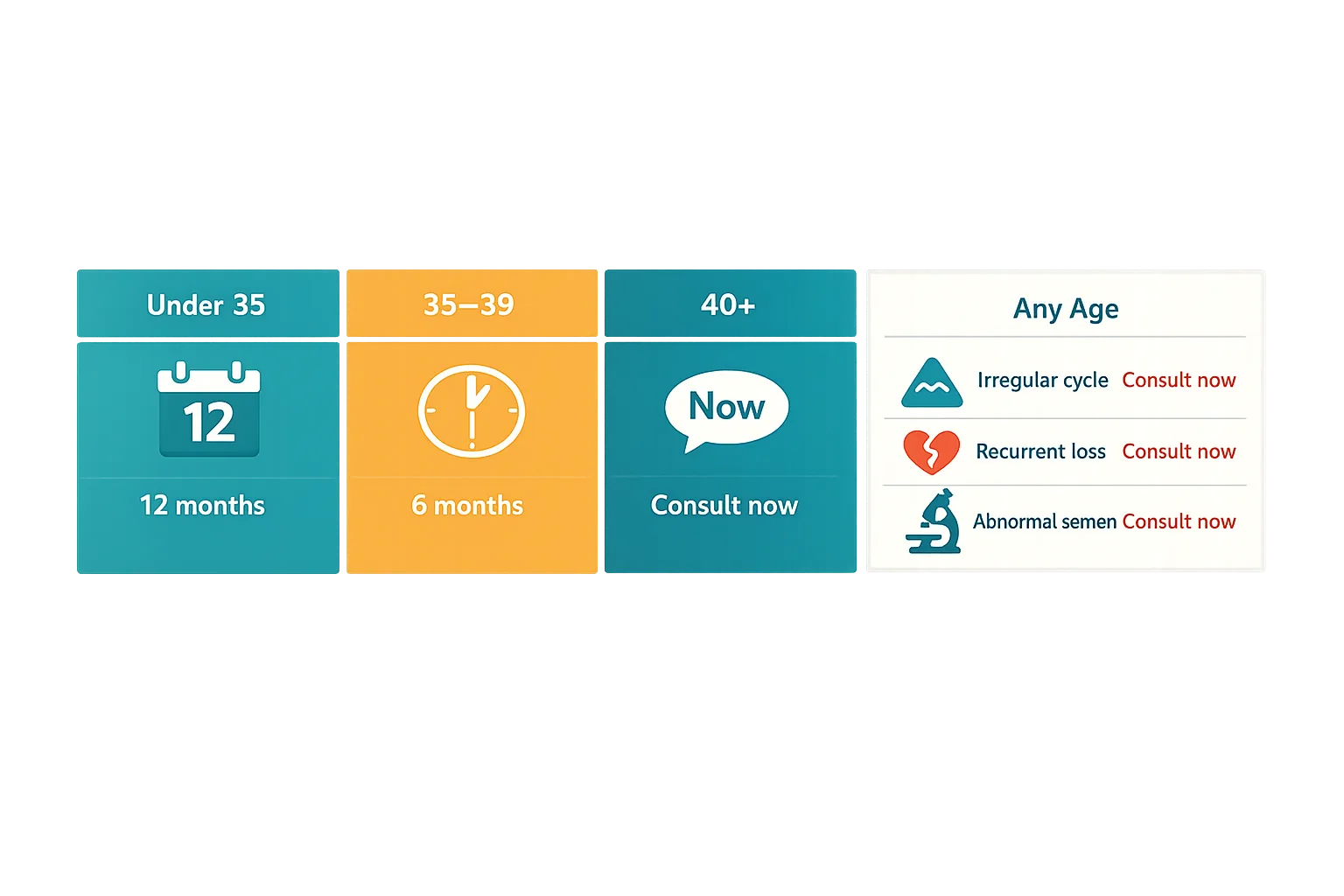
The right time to consult a fertility specialist depends mainly on age and on whether anything in your history suggests a specific problem. A couple where the woman is under 35, with regular cycles and no known risk factors, can reasonably try for twelve months before seeking help. Between 35 and 39 that period should be about six months. At 40 and over, or where cycles are irregular or absent, we would advise an assessment straight away rather than waiting for an arbitrary interval to pass. The same applies if there is known endometriosis, polycystic ovary syndrome, previous pelvic surgery or infection, a history of recurrent miscarriage, or an abnormal semen analysis. Consulting early is not a commitment to treatment. In many cases the evaluation is reassuring, and where it is not, starting earlier preserves more options.
Watch: Right Time to Consult a Doctor When trying for pregnancy
Dr. Vani Sundarapandian explains this on the Jananam Fertility Centre channel.
Signs you should not wait
- Periods that are irregular, very infrequent or absent
- Known endometriosis, PCOS, fibroids or previous pelvic surgery
- Two or more miscarriages
- Previous pelvic infection or appendicitis with complications
- A known abnormality on semen analysis
- Previous cancer treatment affecting either partner
What happens at a first consultation
A first visit covers medical and menstrual history for both partners, an ultrasound to assess the uterus and ovaries, ovarian reserve testing, and a semen analysis. Most couples leave with a clearer picture of whether there is a treatable cause.
See how to arrange a consultation, or read about unexplained infertility if previous tests have been normal.
When is the right time to seek fertility advice?
How long should we try before seeking help?
Under 35 with regular cycles and no known risk factors, about twelve months is reasonable. Between 35 and 39, roughly six months. At 40 and over, we would advise assessment straight away rather than waiting for an interval to pass.
When should we come in sooner?
Where cycles are irregular or absent, or there is known endometriosis, polycystic ovary syndrome, previous pelvic surgery or infection, a history of recurrent miscarriage, or an abnormal semen analysis. These warrant assessment without waiting.
Does consulting early commit us to treatment?
No. Consulting early is not a commitment to treatment. In many cases the evaluation is reassuring, and where it is not, starting earlier preserves more options than waiting does.
Should my partner be assessed at the same time?
Yes. Male factor contributes to a substantial proportion of cases, and a semen analysis is quick and straightforward. Assessing one partner alone risks spending months investigating the wrong side.
What happens at a first fertility consultation?
A history from both partners, an examination, and a plan for baseline tests: ovulation assessment, ovarian reserve, imaging of the uterus and tubes, and a semen analysis. The aim is to establish what is happening before discussing treatment.
Is it too late at 40?
No, but time matters more. Ovarian reserve and egg quality decline, so the sequence of investigation and treatment is usually compressed, and options such as IVF may be discussed earlier than they would be for a younger couple.
What happens at the first appointment?
A history from both partners, an examination, and a plan for baseline tests covering ovulation, ovarian reserve, imaging of the uterus and tubes, and a semen analysis.
Should my partner come to the first appointment?
Where possible, yes. Male factor is common, decisions affect both of you, and hearing the explanation directly avoids one partner having to relay complex information.
What if the assessment finds nothing wrong?
That is a common and genuinely useful outcome. It rules out the causes that testing can detect, and it establishes a baseline against which anything later can be compared. It also means the conversation turns to age and duration rather than to a specific problem, and those determine whether to continue trying or to consider treatment.
Is there any harm in being assessed too early?
No. The tests are straightforward and the information does not expire quickly. The more common problem is the opposite: waiting a full year out of habit when age or an irregular cycle meant earlier review was appropriate. Assessment establishes a baseline and closes off nothing.
Clinical references
Independent clinical guidance relevant to this topic:
- NICE CG156 — Fertility problems: assessment and treatment
- WHO — Infertility fact sheet
- NICHD — Infertility and fertility
This page summarises guidance discussed by Dr. Vani Sundarapandian, MD, DGO, MRCOG (UK), founder and Medical Director of Jananam Fertility Centre, Neelankarai, Chennai. It is general information and not a substitute for consultation.


