





- By: Jananam Fertility Centre
- September 11, 2026

If all fertility tests are normal, is IVF the only option?
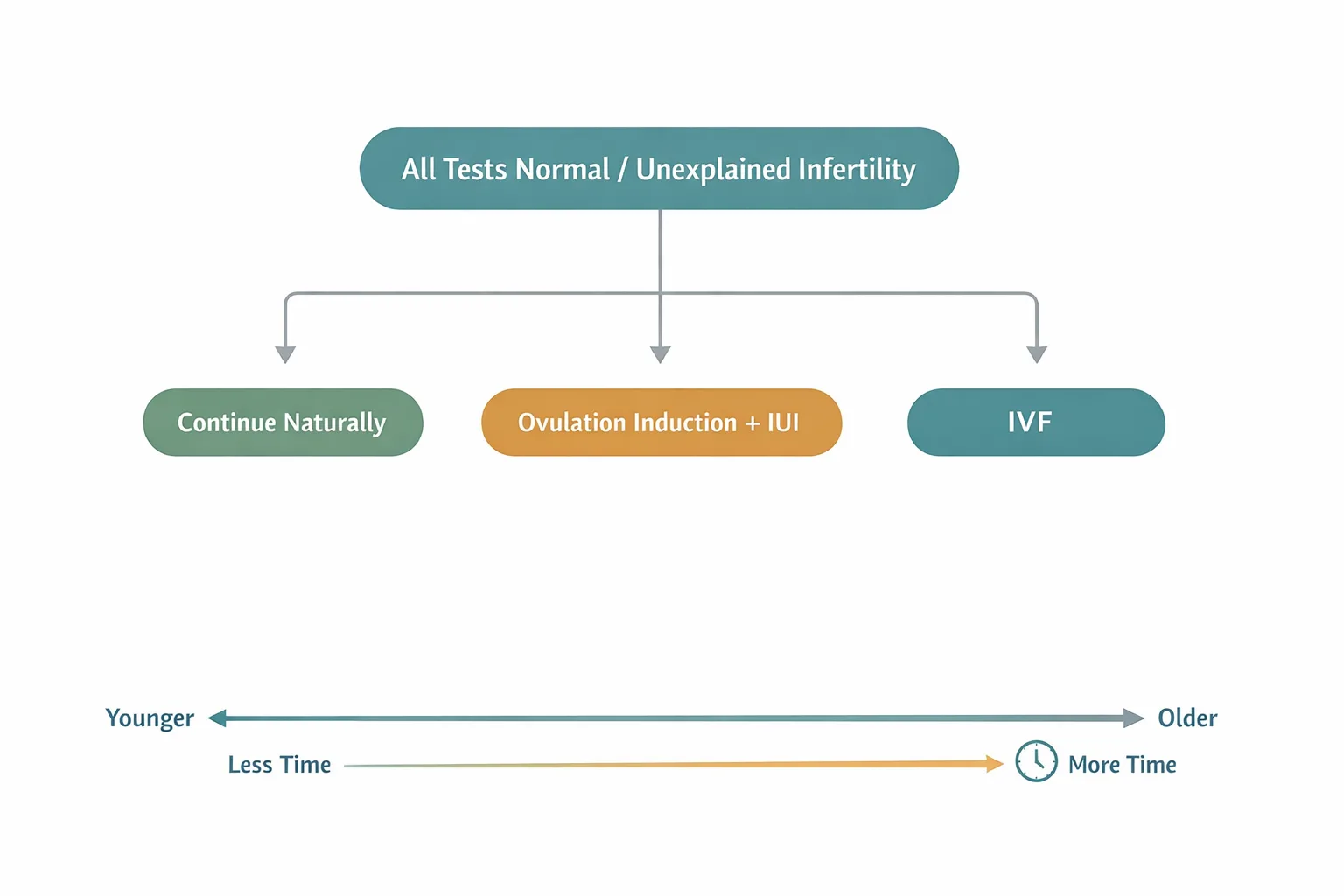
No. When investigations come back normal but conception has not happened, the diagnosis is unexplained infertility, and IVF is one option among several rather than an automatic next step. Standard testing examines ovulation, tubal patency, uterine anatomy and semen parameters. It cannot assess egg quality directly, whether fertilisation occurs normally, or whether an embryo implants, so a normal result set means no detectable cause rather than no cause. What matters in choosing treatment is the woman’s age, how long you have been trying, and whether ovarian reserve is reduced. A younger couple with a short history may reasonably continue trying, or start with ovulation induction and intrauterine insemination. Where the woman is older, the duration is longer, or reserve is falling, moving to IVF earlier is usually the better use of time. Age is the variable that cannot be recovered.
Watch: IVF The Only Solution When All Tests Are Clear
Dr. Vani Sundarapandian explains this on the Jananam Fertility Centre channel.
What normal tests actually rule out
A standard fertility workup confirms that ovulation is occurring, that the fallopian tubes are open, that the uterine cavity looks normal, and that semen parameters fall within reference ranges. It does not directly assess egg quality, fertilisation, embryo development or implantation.
Options when tests are clear
- Continued natural attempts — reasonable where the woman is young and the history is short
- Ovulation induction with IUI — often three to six cycles before reassessing
- IVF — also diagnostic, because it shows whether eggs fertilise and embryos develop
How the decision is made
Age, duration of trying and ovarian reserve drive the choice. IVF has a practical advantage beyond treatment: it reveals information no test can provide, including fertilisation rate and embryo quality.
Related: unexplained infertility at Jananam, IUI treatment and IVF treatment.
What are the options when tests come back normal?
What does unexplained infertility actually mean?
It means standard testing found no detectable cause. Investigations examine ovulation, tubal patency, uterine anatomy and semen parameters, but cannot assess egg quality directly, whether fertilisation occurs normally, or whether an embryo implants. No detectable cause is not the same as no cause.
Should we keep trying naturally?
It depends on age and duration. A younger couple with a short history may reasonably continue trying. Where the woman is older, the history is longer, or ovarian reserve is falling, continuing to wait costs more than it gains.
Is IUI worth trying first?
Often, yes. Ovulation induction with intrauterine insemination is a reasonable first step for younger couples with a short history, and it is less invasive and less costly than IVF. The decision turns on age, duration and ovarian reserve.
Why does age matter so much in this decision?
Because age is the one variable that cannot be recovered. Ovarian reserve and egg quality decline with time, so the same six months of waiting carries a different cost at 31 than at 39.
Will more testing find the cause?
Sometimes, but additional tests do not always change what is recommended. The practical question is whether a result would alter the plan; if it would not, the time may be better spent on treatment than on further investigation.
Does unexplained infertility mean nothing is wrong?
No. It means the cause lies outside what current tests can measure, which often involves egg quality, fertilisation or implantation. Many couples with this diagnosis do conceive, with or without treatment.
Can unexplained infertility resolve on its own?
Yes. A proportion of couples with this diagnosis conceive without treatment, which is precisely why age and duration guide whether to continue trying or to intervene.
Does a laparoscopy help in unexplained infertility?
Sometimes it identifies endometriosis or adhesions that imaging missed. Whether it is worthwhile depends on your symptoms and history rather than being routine.
How long should we continue trying before moving to treatment?
That depends on age more than anything else. A younger couple with a short history has room to continue trying or to start with ovulation induction and insemination. Where the woman is in her late thirties or older, or where ovarian reserve is falling, continuing to wait costs more than it is likely to gain. The calculation is about time, not about giving up.
Clinical references
Independent clinical guidance relevant to this topic:
- NICE CG156 — Fertility problems: assessment and treatment
- ASRM — Practice Committee documents
- ACOG — Treating infertility
This page summarises guidance discussed by Dr. Vani Sundarapandian, MD, DGO, MRCOG (UK), founder and Medical Director of Jananam Fertility Centre, Neelankarai, Chennai. It is general information and not a substitute for consultation.


