





- By: Jananam Fertility Centre
- September 11, 2026

How are eggs developed during IVF treatment?
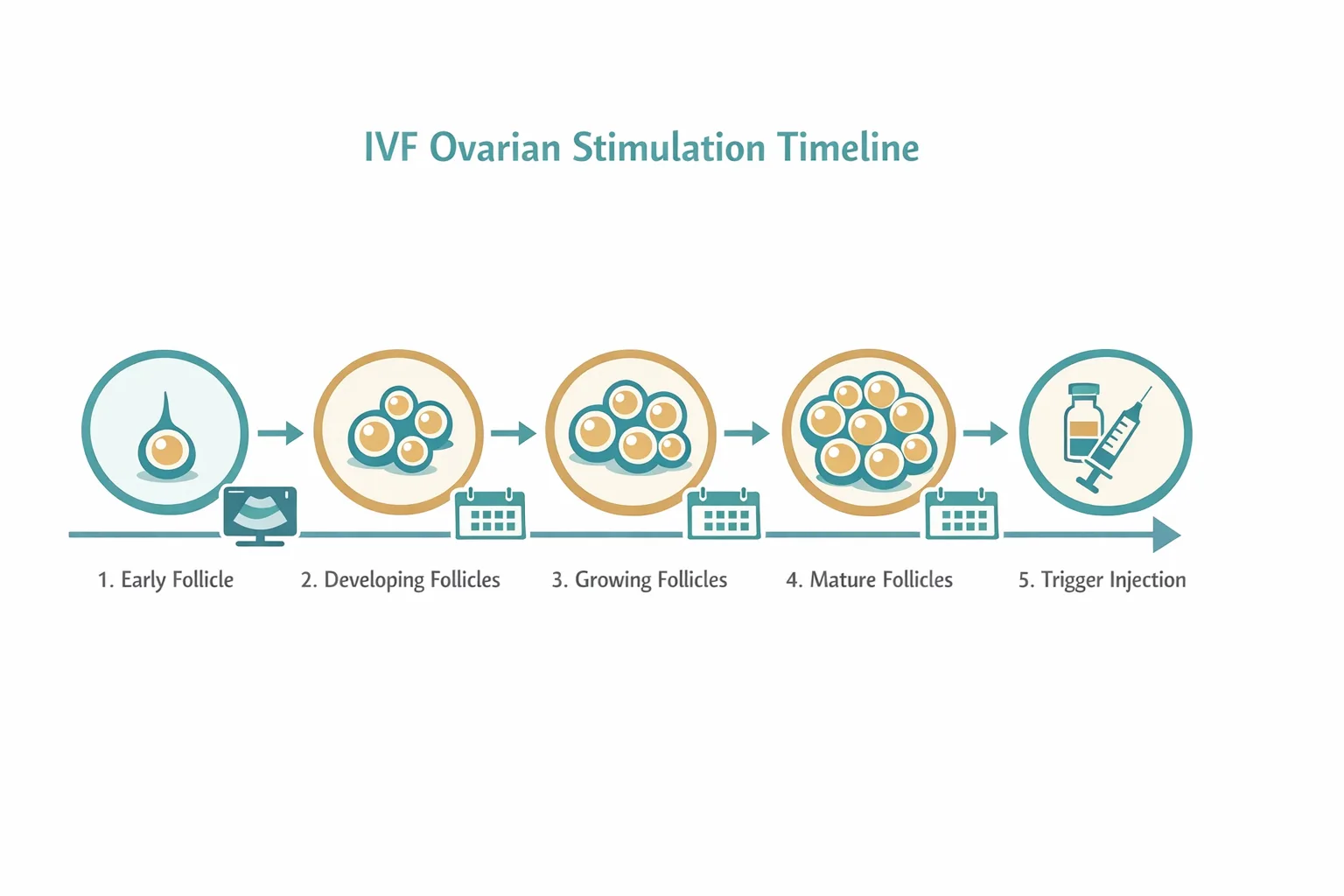
In a natural cycle the ovaries recruit several follicles but only one usually matures and releases an egg. IVF stimulation uses injectable hormones to support a group of those follicles so that several mature together, giving the embryologist more than one egg to work with. Treatment typically runs over eight to twelve days, with ultrasound scans and sometimes blood tests to track how many follicles are growing and how quickly. The dose is adjusted according to that response. When the follicles reach an appropriate size, a trigger injection completes the final maturation of the eggs, and retrieval is scheduled about thirty-four to thirty-six hours later. How many eggs are obtained depends chiefly on age and ovarian reserve, not on the dose alone. A higher dose cannot create follicles that are not there, which is why protocols are individualised rather than standard.
Watch: How the eggs are developed in IVF treatment ?
Dr. Vani Sundarapandian explains this on the Jananam Fertility Centre channel.
What happens during stimulation
- Daily injections support a cohort of follicles that would otherwise be lost
- Ultrasound monitoring every few days tracks follicle number and size
- The dose is adjusted according to response
- A trigger injection completes egg maturation
- Retrieval follows about 34 to 36 hours later
What determines the number of eggs
Age and ovarian reserve are the main factors. Antral follicle count and AMH give an indication before treatment starts. Increasing the dose beyond what the ovaries can respond to does not produce more eggs, and raises the risk of overstimulation.
Monitoring matters
Individualised protocols and close monitoring reduce the risk of ovarian hyperstimulation syndrome while aiming for an appropriate number of mature eggs.
Related: ovarian stimulation at Jananam.
What should you expect during ovarian stimulation?
How long does ovarian stimulation take?
Typically eight to twelve days of daily injections, with ultrasound scans and sometimes blood tests to track how many follicles are growing and how quickly. The dose is adjusted according to that response.
Why does the dose vary between patients?
Because response depends chiefly on age and ovarian reserve. A higher dose cannot create follicles that are not there, so protocols are individualised rather than standard, and the aim is a safe and useful number of eggs.
What is the trigger injection for?
It completes the final maturation of the eggs once follicles reach an appropriate size. Retrieval is then scheduled about thirty-four to thirty-six hours later, and timing this precisely affects how many mature eggs are collected.
How many eggs should I expect?
It depends on age and ovarian reserve rather than on effort or dose. Your doctor can give a realistic range from your AMH and antral follicle count before you start, which is a better basis than comparing with other patients.
Are all the eggs collected usable?
No. Only mature eggs can be fertilised, and not every mature egg fertilises or develops into a viable embryo. This attrition is normal, which is why the number retrieved and the number mature are reported separately.
Does stimulation use up eggs from future cycles?
No. It supports follicles already recruited for that cycle, which would otherwise be lost naturally. It does not draw on the reserve committed to later cycles.
What happens if too few follicles develop?
The cycle may be cancelled and the protocol reconsidered, or it may continue with a smaller number. Which applies depends on your age, reserve and what previous cycles showed.
Can too many follicles be a problem?
Yes. An excessive response raises the risk of ovarian hyperstimulation syndrome, which is why monitoring exists and why the dose is adjusted during the cycle rather than fixed at the start.
What does a poor response to stimulation mean?
It usually reflects reduced ovarian reserve rather than an error in the protocol, and it is more common with increasing age. The cycle may be cancelled and the approach reconsidered, or continued with fewer eggs. A poor response is informative: it tells your doctor what to expect next time and whether a different protocol, or a different route entirely, deserves discussion.
Clinical references
Independent clinical guidance relevant to this topic:
- HFEA — In vitro fertilisation (IVF)
- NICE CG156 — Fertility problems: assessment and treatment
- ESHRE — Guidelines and legal documents
This page summarises guidance discussed by Dr. Vani Sundarapandian, MD, DGO, MRCOG (UK), founder and Medical Director of Jananam Fertility Centre, Neelankarai, Chennai. It is general information and not a substitute for consultation.


