





- By: Jananam Fertility Centre
- September 11, 2026

Does IVF reduce your ovarian reserve?
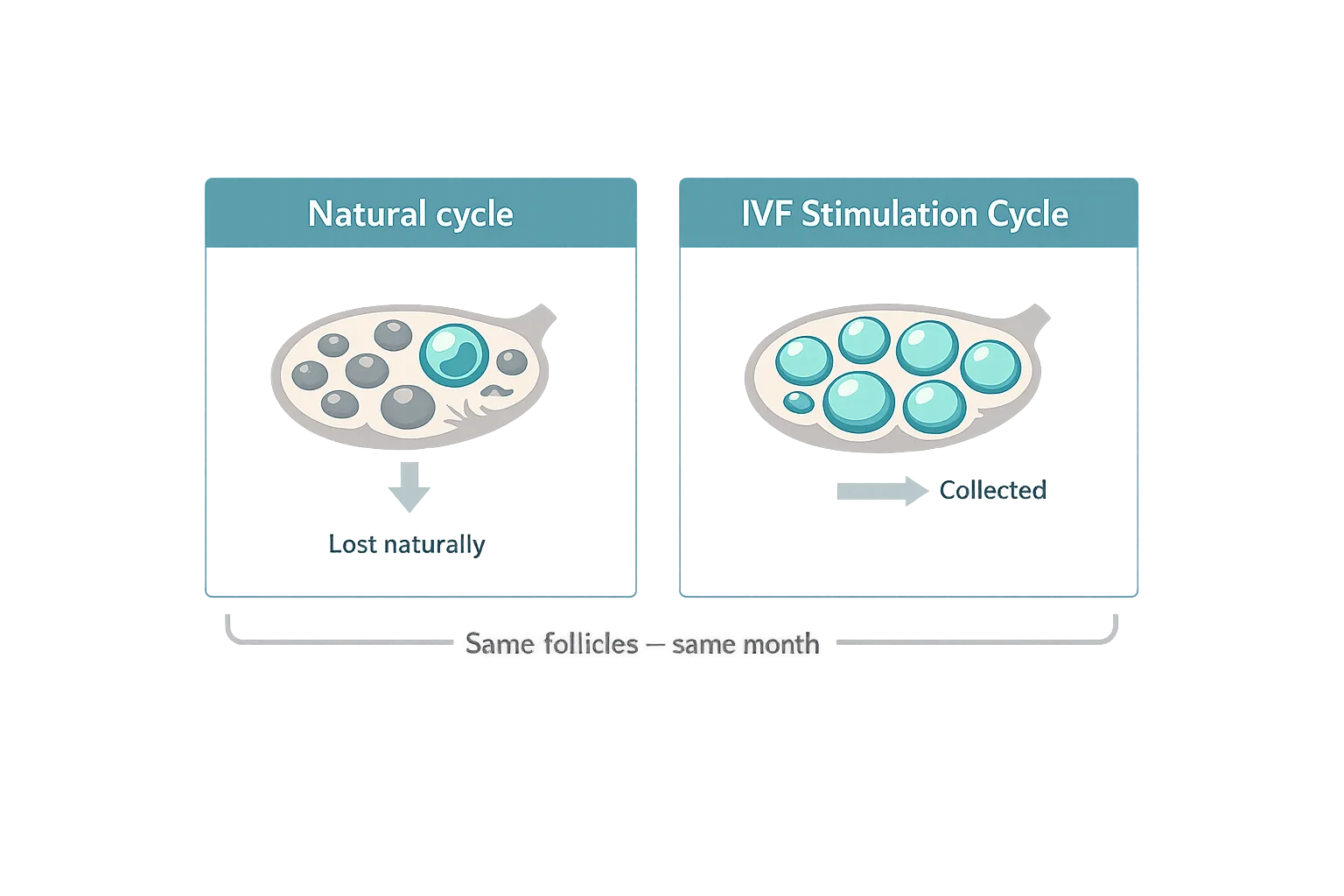
No. This is one of the most common worries patients raise, and the reassurance is based on how the ovary already works. Every menstrual cycle, a group of follicles begins to develop. Normally one becomes dominant and releases an egg, and the rest of that group is lost naturally, regardless of whether any treatment takes place. Ovarian stimulation in IVF supports that same group so that more of them mature and can be collected, instead of being discarded. It is recruiting follicles already committed to that cycle, not reaching forward into future years’ supply. Ovarian reserve declines with age whether or not a woman has IVF, and the decline follows her own biology. What genuinely reduces reserve is ovarian surgery, chemotherapy or radiotherapy, certain genetic conditions, and age itself — not a stimulation cycle.
Watch: Will your ovarian reserve be affected due to IVF?
Dr. Vani Sundarapandian explains this on the Jananam Fertility Centre channel.
What happens to follicles each cycle
A cohort of follicles begins developing every cycle. Without treatment, one becomes dominant and ovulates; the remainder undergo atresia and are lost. This happens regardless of whether you conceive, use contraception, or have any treatment at all.
What stimulation actually does
IVF medication supports follicles from that same cohort so more reach maturity. The eggs collected are ones that would otherwise have been lost that month. Stimulation does not accelerate the underlying decline in reserve.
What does affect ovarian reserve
- Age — the dominant factor
- Ovarian surgery, particularly for endometriomas
- Chemotherapy or pelvic radiotherapy
- Certain genetic conditions, such as Fragile X premutation
- Smoking
How reserve is measured
AMH and antral follicle count give an indication of how many eggs remain. Neither measures egg quality, and neither predicts natural fertility on its own.
Related: how eggs develop during IVF stimulation and understanding AMH levels.
Common questions about IVF and ovarian reserve
Does one IVF cycle use up eggs from future years?
No. Stimulation supports the group of follicles already recruited for that cycle, which would otherwise be lost naturally. It does not reach into the reserve committed to later cycles, so a stimulation cycle does not bring menopause forward.
What actually reduces ovarian reserve?
Age is the main factor. Beyond that, ovarian surgery, chemotherapy or radiotherapy, and certain genetic conditions genuinely reduce the number of eggs remaining. A stimulation cycle is not on that list.
Will my AMH fall after IVF?
AMH fluctuates between tests and may read lower shortly after stimulation, but this reflects measurement timing rather than permanent loss. Trends over time, alongside antral follicle count, give a more reliable picture than any single result.
Does repeated IVF damage the ovaries?
Repeated cycles are not associated with accelerated decline in reserve. What changes across several cycles is your age, which continues to affect egg number and quality whether or not treatment takes place.
Should low ovarian reserve stop me trying IVF?
Not necessarily. Low reserve usually means fewer eggs are collected per cycle rather than that treatment is futile. Protocols are individualised, and your doctor will explain what your own AMH and antral follicle count suggest.
Can anything improve ovarian reserve?
No treatment reliably increases the number of eggs remaining. What can be addressed are factors affecting the eggs you do have, including thyroid function, diabetes control, smoking and weight, and the timing of treatment itself.
Is AMH the only measure of ovarian reserve?
No. Antral follicle count on ultrasound is used alongside it, and the two together give a better estimate than either alone. Neither predicts natural conception, and neither measures egg quality.
Does the number of eggs collected predict future fertility?
Not directly. It reflects how the ovaries responded to that cycle’s stimulation, which relates to current reserve. It does not indicate how long natural fertility will continue.
Should I freeze eggs before starting IVF if reserve is low?
That is worth discussing rather than assuming. Freezing eggs or embryos across more than one stimulation cycle can accumulate a larger number than a single cycle produces, which is sometimes proposed where reserve is low. Whether it helps depends on your age, how the ovaries respond, and whether treatment is being delayed for another reason. Your doctor should explain the trade-off between accumulating over time and the cost of that time passing.
Clinical references
Independent clinical guidance relevant to this topic:
- HFEA — In vitro fertilisation (IVF)
- ASRM — Practice Committee documents
- ESHRE — Guidelines and legal documents
This page summarises guidance discussed by Dr. Vani Sundarapandian, MD, DGO, MRCOG (UK), founder and Medical Director of Jananam Fertility Centre, Neelankarai, Chennai. It is general information and not a substitute for consultation.


