





- By: Jananam Fertility Centre
- October 1, 2026

Planning for pregnancy does not always happen at the same stage of life for everyone. The Egg Freezing Process is a fertility preservation option that allows women to collect and store unfertilized eggs for possible future use. It may be considered for personal, career, family-planning, or medical reasons. Women exploring the best ivf centre in chennai can also discuss egg freezing and other fertility preservation options with a qualified fertility specialist. Understanding how egg freezing works, what happens during treatment, and what to expect afterward can help women make informed decisions about their reproductive future.
In this blog, we will explore the egg freezing process, its key stages, potential benefits, important considerations, and what women can expect when using frozen eggs in the future.
What Is Egg Freezing?
Egg freezing, medically known as oocyte cryopreservation, is a procedure used to preserve unfertilized eggs. The eggs are collected from the ovaries and frozen using a rapid-freezing technique called vitrification. They can then be stored under specialized laboratory conditions until the woman decides whether to use them.
When the eggs are needed later, suitable eggs are carefully thawed and fertilized with sperm in a laboratory. If embryos develop successfully, they may be considered for transfer into the uterus as part of fertility treatment. This process may be part of Test Tube Baby Treatment, depending on the individual’s fertility plan and medical needs.
Why Do Women Consider Egg Freezing?
There are several reasons why a woman may consider preserving her eggs. Some women may want to delay pregnancy while focusing on education, career, relationships, or personal goals. Others may consider fertility preservation before certain medical treatments that could affect ovarian function.
Age is also an important consideration because egg quantity and quality generally change over time. Therefore, women who are considering fertility preservation can discuss their reproductive goals and ovarian reserve with a qualified fertility specialist. Understanding aspects of reproductive health, including fallopian tube function, can also help women have a more complete discussion about their fertility and future family-planning options.
Key Stages of the Egg Freezing Process
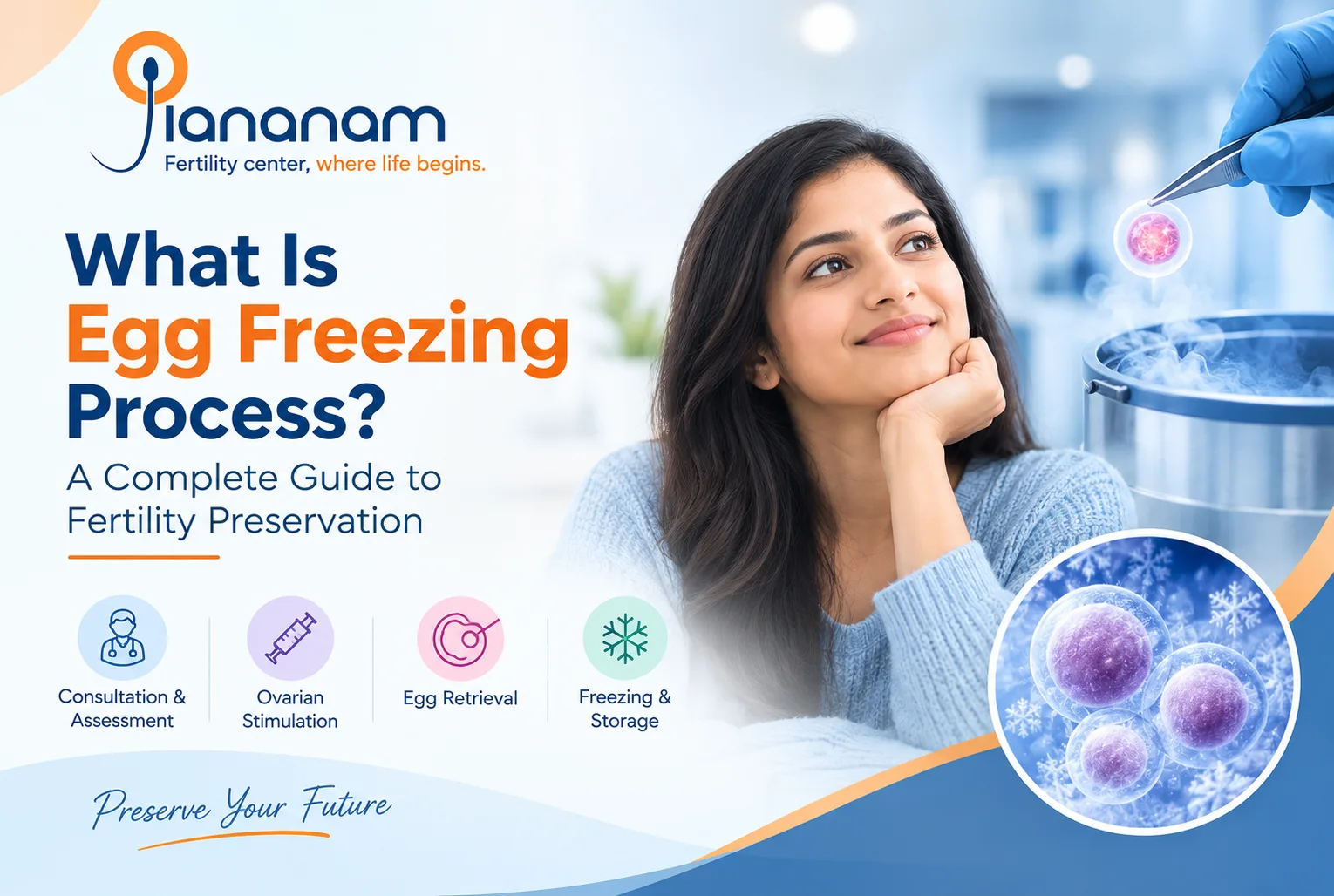
The Egg Freezing Process involves several important stages, from the initial fertility assessment to the safe storage of mature eggs. Each stage is carefully monitored by the fertility team. Understanding How to Track Ovulation can also help women learn more about their menstrual cycle and fertility, although egg-freezing treatment itself is medically monitored through scans and hormone tests.
- Initial Fertility Assessment – The doctor reviews your medical history and evaluates ovarian reserve and reproductive health.
- Ovarian Stimulation – Fertility medicines are prescribed to encourage the ovaries to develop multiple follicles.
- Ovulation Monitoring – Ultrasound scans and hormone tests are used to monitor follicle growth and determine the appropriate timing.
- Trigger Injection – A trigger medication is given when the follicles are ready for egg retrieval.
- Egg Retrieval – Mature eggs are collected from the ovaries using an ultrasound-guided procedure.
- Egg Freezing – Suitable mature eggs are rapidly frozen using vitrification and stored under controlled laboratory conditions.
- Future Use – When needed, frozen eggs can be thawed, fertilized, and developed into embryos for possible future treatment.
How Does the Egg Freezing Process Work?
The Egg Freezing Process usually involves several stages, beginning with an assessment and continuing through ovarian stimulation, monitoring, egg retrieval, and freezing. The exact treatment plan may differ depending on age, ovarian reserve, medical history, and response to medication.
1. Fertility Assessment
The first step is usually a consultation with a fertility specialist. The doctor may review medical history and recommend blood tests and ultrasound scans to assess ovarian reserve and reproductive health.
Choosing a suitable Fertility Clinic Chennai can help ensure that the evaluation, treatment, laboratory work, and follow-up care are properly coordinated.
2. Ovarian Stimulation
During the Egg Freezing Process, fertility medicines may be prescribed to encourage the ovaries to develop several follicles during one menstrual cycle. In some fertility treatment plans, Letrozole for Ovulation Induction may also be discussed depending on the individual’s medical needs. Regular ultrasound scans and, when necessary, hormone tests are used to monitor the response.
The medication dosage may be adjusted according to how the ovaries respond. This monitoring is important because the aim is to collect mature eggs safely while supporting a carefully monitored treatment cycle.
3. Trigger Injection
Once the follicles have developed sufficiently, a trigger injection may be given to support the final maturation of the eggs. The timing of this injection is carefully planned because egg retrieval generally takes place after a specific interval.
4. Egg Retrieval
Egg retrieval is a procedure in which mature eggs are collected from the ovaries. It is generally performed using ultrasound guidance and a thin needle. Sedation or anesthesia may be provided according to the clinic’s protocol and the patient’s needs.
After collection, the eggs are examined in the laboratory to identify mature eggs that are suitable for freezing.
5. Freezing and Storage
The mature eggs are rapidly frozen using vitrification. This method helps preserve the eggs for possible future use. The frozen eggs are stored in specialized laboratory facilities with appropriate monitoring and storage systems.
The Egg Freezing Process is therefore completed after suitable mature eggs have been preserved and safely stored.
What Happens When Frozen Eggs Are Used?
When a woman decides to use her stored eggs, the eggs are carefully thawed in the laboratory. Suitable eggs can then be fertilized with sperm. A technique called intracytoplasmic sperm injection may be used to help fertilize an egg.
If embryos develop successfully, the fertility team may consider Embryo Transfer in IVF based on the individual’s treatment plan.
Egg freezing is different from treatments such as Egg Donation IVF, because egg freezing preserves the woman’s own unfertilized eggs for possible future use.
Benefits and Limitations of Egg Freezing
One important benefit of the Egg Freezing Process is that it provides an option to preserve unfertilized eggs for later use. It may offer greater flexibility for women who are not ready to become pregnant at the present time.
However, egg freezing does not guarantee a future pregnancy. The number and quality of eggs collected, the woman’s age when eggs are frozen, survival after thawing, fertilization, embryo development, and other factors can influence the eventual outcome.
It is also useful to understand that egg freezing is different from IVF. People researching the benefits of IVF should remember that IVF and fertility preservation involve different procedures and treatment goals.
Is Egg Freezing Safe?
Egg freezing is an established fertility preservation technique, but every medical procedure can involve possible risks. Fertility medicines may cause side effects, while egg retrieval is an invasive procedure that can have complications.
For this reason, the Egg Freezing Process should be planned and monitored by a qualified fertility team. Patients should discuss their medical history, possible risks, expected outcomes, and alternative options before beginning treatment.
How Long Does Egg Freezing Take?
The treatment timeline varies from one woman to another. Ovarian stimulation commonly takes around two weeks, although the exact duration depends on the individual’s menstrual cycle and response to medication.
Some women may require more than one cycle depending on the number of mature eggs collected. Your fertility specialist can explain the expected timeline after reviewing your test results.
Choosing the Right Fertility Centre
When considering egg freezing, it is helpful to look at the experience of the medical team, laboratory facilities, fertility preservation services, storage arrangements, and follow-up support.
A consultation with Jananam Fertility Centre can help women understand their fertility preservation options and discuss whether egg freezing may be appropriate for their individual circumstances. Women searching for an ivf treatment in chennai may also benefit from discussing different fertility services with a qualified specialist.

Final Thoughts
The Egg Freezing Process offers women an option to preserve unfertilized eggs for possible future use. From fertility assessment and ovarian stimulation to egg retrieval and laboratory freezing, each stage requires careful planning and medical supervision.
Because fertility and treatment outcomes differ from person to person, there is no single approach that suits everyone. Speaking with a qualified fertility specialist can help you understand your ovarian reserve, treatment options, potential risks, and realistic expectations before making a decision.
Frequently Asked Questions
1. What is the best age for egg freezing?
There is no single age that is best for every woman. Egg quantity and quality generally change with age, so women interested in fertility preservation should discuss their individual circumstances and ovarian reserve with a fertility specialist.
2. Is egg freezing painful?
The egg retrieval procedure is generally performed with sedation or anesthesia to reduce discomfort. Some women may experience mild cramping, bloating, or pelvic discomfort afterward.
3. How long can frozen eggs be stored?
Eggs can be stored under appropriate laboratory conditions for an extended period. Storage rules and arrangements can vary, so patients should discuss these details with their fertility centre.
4. Does egg freezing guarantee pregnancy?
No. Egg freezing preserves eggs for possible future use, but it does not guarantee pregnancy. Age at freezing, number of eggs collected, egg survival after thawing, fertilization, embryo development, and other factors can affect the outcome.
5. Can frozen eggs be used for IVF later?
Yes. Frozen eggs can be thawed and fertilized when a woman decides to use them. If embryos develop successfully, an appropriate embryo may later be considered for transfer according to the fertility specialist’s recommendations.


