





- By: Jananam Fertility Centre
- October 1, 2026

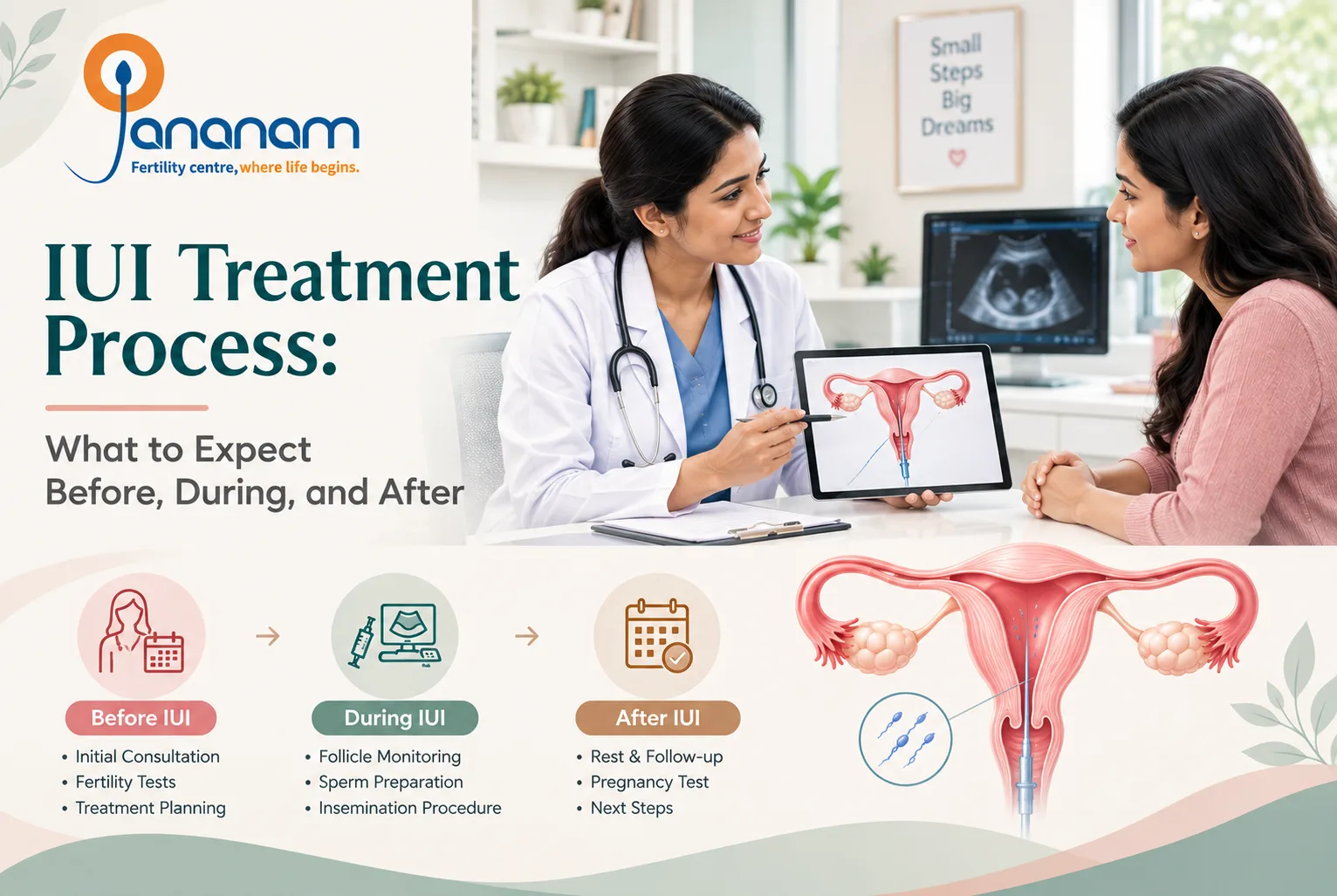
Starting fertility treatment can bring many questions, especially when you are unsure about what happens at each stage. The IUI Treatment Process is a commonly used fertility treatment in which prepared sperm is placed directly into the uterus around the time of ovulation. Couples may also learn about other fertility options, such as Embryo Transfer in IVF, when discussing treatment choices with a fertility specialist. Although the procedure is relatively simple, proper timing, fertility evaluation, and medical guidance are important throughout the treatment.
In this guide, we will explore what to expect before, during, and after IUI treatment, including how to prepare for the procedure, how the insemination is performed, what happens after IUI, and what couples should know while waiting for the pregnancy test.
What Is IUI Treatment?
Intrauterine insemination, commonly called IUI, is a fertility treatment designed to bring sperm closer to the egg Donation IVF . During the procedure, a specially prepared spermIUI Treatment Process: What to Expect Before, During, and After sample is introduced into the uterus using a thin catheter.
IUI may be considered for couples experiencing unexplained infertility, certain sperm-related concerns, ovulation difficulties, or other fertility challenges. However, the suitability of IUI depends on the individual circumstances of both partners.
For couples looking for a Fertility Clinic Chennai, discussing medical history, fertility tests, and treatment options with a qualified fertility specialist can help determine whether IUI is appropriate.
IUI Treatment Process Before the Procedure
Before beginning treatment, the fertility specialist usually evaluates the couple’s reproductive health. This may include medical history, physical examination, blood tests, ultrasound scans, and semen analysis.
The doctor may also assess the condition of the uterus and fallopian tubes because at least one functioning fallopian tube is generally needed for IUI to have a reasonable chance of working.
1. Monitoring Ovulation
Timing is an important part of the IUI Treatment Process. The fertility team may monitor ovulation through ultrasound scans, hormone tests, or other methods. In some cases, medication may be recommended to encourage the development of an egg.
Letrozole for Ovulation Induction may be prescribed in selected patients when medically appropriate. The medication and dosage should always be determined by a fertility specialist.
2. Preparing the Sperm Sample
On the day of insemination, a semen sample is collected and processed in the laboratory. The preparation separates healthy, motile sperm from other components of the sample.
This step helps provide a concentrated sample of suitable sperm for insemination.
What Happens During IUI?
The actual insemination is usually quick. The patient lies comfortably while the doctor gently places a thin catheter through the cervix and into the uterus. The prepared sperm is then introduced through the catheter.
Most patients do not require anesthesia for IUI. Some may experience mild cramping or temporary discomfort, but experiences can vary. When sperm-related concerns are identified, options such as oligospermia treatment may also be discussed as part of an overall fertility evaluation.
The IUI Treatment Process is generally completed within a short period, and patients can usually return home afterward according to their doctor’s advice.
What to Expect Before and After IUI
| Before IUI | After IUI |
| The doctor reviews your medical history and fertility test results. | You may return to normal daily activities unless your doctor advises otherwise. |
| Ovulation is monitored through ultrasound scans or hormone tests. | Mild cramping or light spotting may occur temporarily. |
| Fertility medication may be prescribed when appropriate. | Continue prescribed medicines according to your doctor’s instructions. |
| The timing of ovulation is carefully monitored. | Avoid testing for pregnancy too early, as it may cause confusion. |
| A semen sample is collected on the day of IUI. | Follow your fertility specialist’s advice about exercise and other activities. |
| The sperm sample is processed in the laboratory to select suitable sperm. | Wait for the recommended date before taking a pregnancy test. |
| The doctor explains the procedure and answers your questions. | Contact your doctor if you experience unusual or severe symptoms. |
| Proper timing helps ensure insemination takes place around ovulation. | Attend your scheduled follow-up appointment and discuss the results with your doctor. |
How Long Does the IUI Treatment Process Take?
The complete IUI Treatment Process may extend across several days or weeks because fertility monitoring begins before insemination. The exact timeline depends on the menstrual cycle, ovulation pattern, medications, and individual treatment plan.
For couples who are exploring fertility care, choosing an experienced fertility team can make the process easier to understand. A consultation at Jananam Fertility Centre can help patients discuss their fertility concerns and available treatment options.
What Factors Can Affect IUI Success?
Several factors may influence the outcome of IUI. These can include age, ovarian reserve, ovulation, sperm quality, the condition of the reproductive organs, and the underlying cause of infertility.
For example, certain sperm-related conditions may require a different approach, while some patients may benefits of ivf from other fertility treatments. If IUI is not successful, the doctor may discuss alternative options based on the patient’s medical situation.
It is also important to understand that IUI does not guarantee pregnancy. Each couple’s fertility journey is different, so treatment decisions should be based on proper medical evaluation rather than general expectations.
IUI Treatment vs Other Fertility Treatments
IUI and IVF are different procedures. In IUI, fertilization is expected to occur inside the body after prepared sperm is placed into the uterus. In IVF, eggs are collected and fertilized with sperm in a laboratory before an embryo is transferred into the uterus.
Therefore, ivf treatment in chennai may be considered when IUI is not suitable, when previous IUI attempts have not worked, or when certain fertility conditions require a more advanced approach.
The IUI Treatment Process is generally less invasive than IVF, but whether it is appropriate depends on the couple’s fertility assessment.
IUI Treatment Cost
The cost of IUI can vary depending on the fertility clinic, required tests, medications, ovulation monitoring, sperm preparation, and the number of treatment cycles needed. Additional expenses may apply when fertility medicines or diagnostic procedures are recommended. Therefore, couples should discuss the complete treatment plan and expected expenses with their fertility specialist before starting treatment.
| Cost Factor | What It May Include |
| Consultation | Initial fertility assessment and doctor’s consultation |
| Fertility Tests | Blood tests, ultrasound scans, and other recommended evaluations |
| Ovulation Medication | Medicines prescribed to support or regulate ovulation |
| Ovulation Monitoring | Ultrasound scans and hormone monitoring when required |
| Sperm Preparation | Laboratory processing of the semen sample before IUI |
| IUI Procedure | The insemination procedure itself |
| Follow-Up Care | Pregnancy testing and follow-up consultation |
When Should You Contact a Fertility Specialist?
If you have been trying to conceive without success, How to Track Ovulation are experiencing irregular ovulation, or have been diagnosed with a fertility-related condition, speaking with a fertility specialist can provide useful guidance.
Searching for ivf treatment near me can provide many options, but it is important to look beyond location alone. Consider the doctor’s experience, available diagnostic services, laboratory facilities, treatment approach, and the level of support offered throughout your fertility journey.
For patients comparing fertility services, a consultation with the Best IVF doctor in Chennai can help explain whether IUI, IVF, or another treatment may be appropriate for their specific needs.

Final Thoughts
The IUI Treatment Process involves several important stages, from fertility evaluation and ovulation monitoring to sperm preparation, insemination, and pregnancy testing. Although the procedure itself is usually brief, careful planning and correct timing play an important role.
Every fertility journey is different. Therefore, couples should discuss their medical history, test results, treatment choices, and expectations with a qualified fertility specialist. With clear information and appropriate medical guidance, patients can approach fertility treatment with greater confidence and understanding.
Frequently Asked Questions
1. Is IUI painful?
IUI is generally considered a simple procedure. Some patients may experience mild cramping or discomfort when the catheter is inserted, but the experience varies from person to person.
2. How soon can I take a pregnancy test after IUI?
Your fertility specialist will usually advise you when to take a pregnancy test. Testing too early may lead to confusing or inaccurate results, particularly if fertility medications were used.
3. Can I continue normal activities after IUI?
Many patients can return to their usual activities after the procedure. However, follow your fertility specialist’s specific instructions regarding exercise, medications, and other activities.
4. Is IUI suitable for everyone?
No. IUI is not suitable for every fertility situation. Factors such as age, ovulation, sperm quality, fallopian tube condition, and the underlying cause of infertility need to be considered before treatment.
5. What happens if IUI does not result in pregnancy?
If IUI does not result in pregnancy, your doctor may review the previous cycle and discuss the next appropriate step. Depending on your individual circumstances, this may include another IUI cycle or considering other fertility treatment options.


